Hitachi and FANUC Join Forces to Bring Physical AI Into Real-World Manufacturing

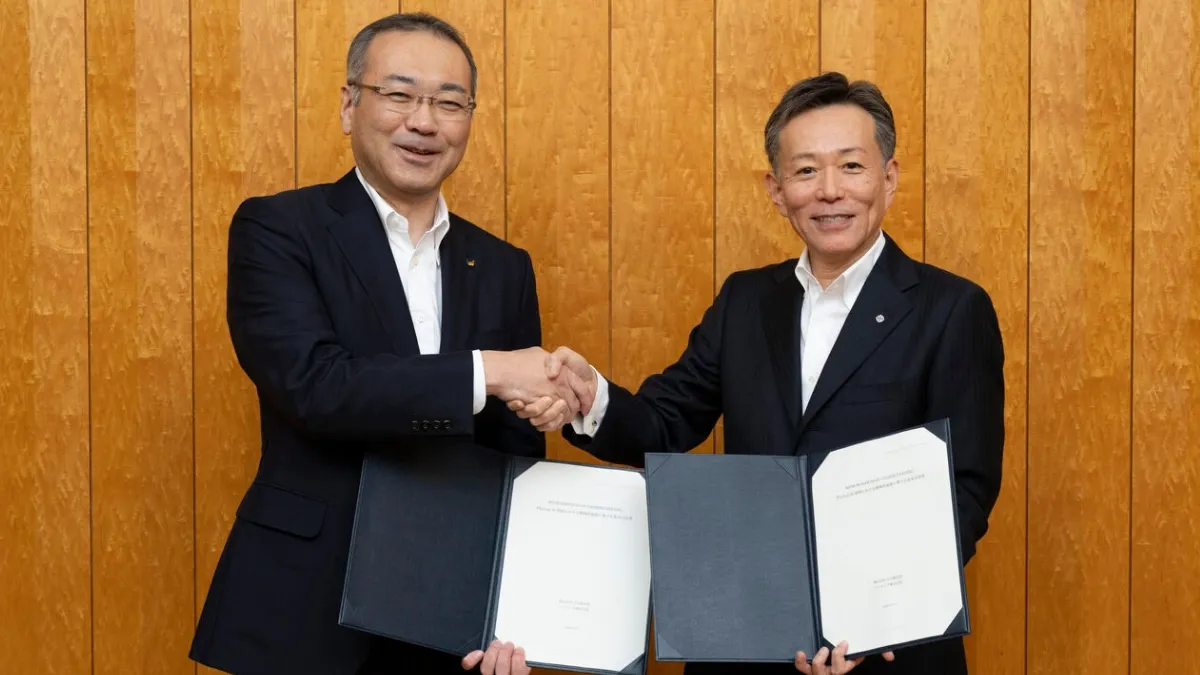
Hitachi and FANUC formed a strategic alliance to commercialize Physical AI, combining HMAX Industry AI with industrial robotics. Using Hitachi’s Japanese plants as testbeds, they aim to deploy adaptive, real-time decision-making systems by fiscal 2027. This initiative addresses global manufacturing labor shortages and offers Canadian SMEs scalable, flexible automation solutions.
The strategic relationship combines intelligent robotics, advanced AI, and real-world manufacturing expertise to accelerate industrial automation, boost productivity, and address growing workforce concerns. Manufacturing is shifting from traditional automation to intelligent systems that can learn, adapt, and make real-time decisions. On September 30, 2026, Japanese technology heavyweights Hitachi and FANUC announced a strategic agreement to commercialize Physical AI, bringing artificial intelligence into real-world production environments.
The partnership combines Hitachi's AI technologies, represented by HMAX Industry, with FANUC's AI-equipped industrial robots. By combining new AI models with physical machinery, the companies aim to build advanced Physical AI that can be applied immediately to complex tasks and adapt to changing production environments.
Bringing Physical AI From Concept to Factory Floor
Unlike traditional industrial automation, which follows predefined instructions, Physical AI lets machines sense their environment, process information, and take appropriate physical action. This distinction matters especially in manufacturing processes that involve differently shaped components, frequent production changes, and tasks requiring human judgment. Hitachi and FANUC will begin testing their technology at Hitachi's manufacturing facilities in Japan's Ibaraki region. Using Hitachi Group factories as “Customer Zero,” the companies will enable AI to continuously learn site-specific production rules and further train and evolve Physical AI before deploying solutions to customers.
Initial applications will include picking parts of various shapes and performing changeovers when production items change. The companies will evaluate and improve recognition accuracy, robot motion, takt time, and quality effectiveness. The firms intend to begin delivering jointly created solutions to customers in fiscal 2027, across a wide range of industries, including semiconductors, pharmaceuticals, healthcare, advanced materials, automotive, logistics, food, shipbuilding, and agriculture.
Hitachi has been working to transform social infrastructure by combining AI with the domain knowledge it has accumulated at social infrastructure sites. Through this strategic partnership with FANUC, we aim to innovate manufacturing sites that support people's lives and industries through the use of Physical AI. By combining FANUC's world-class advanced industrial robotics technologies with Hitachi's manufacturing expertise, production-line engineering capabilities, and digital technologies, we will accelerate the implementation of Physical AI at manufacturing sites. By applying the outcomes gained through our Customer Zero initiatives and providing customers with integrated support from on-site Physical AI implementation through operation and continuous improvement, we will contribute to improving productivity and quality across manufacturing operations and addressing social challenges such as labor shortages.
Toshiaki Tokunaga,
President and CEO, Hitachi, Ltd.
Combining Industrial Experience With Intelligent Technology
The collaboration combines FANUC’s advanced industrial robotics technologies with Hitachi’s manufacturing expertise, production-line engineering capabilities, and digital technologies to accelerate the implementation of Physical AI at manufacturing sites. Hitachi’s HMAX Industry initiative brings together AI and industry-specific domain expertise to accelerate digital transformation and the application of AI in industrial settings. FANUC brings extensive experience in industrial robotics, motion control, and factory automation. Together, these skills may let robots adapt to production variances while maintaining the precision and consistency required in complex manufacturing environments.
Toshiaki Tokunaga, Hitachi President and CEO, underlined the need to implement AI in real-world industrial situations. In his formal LinkedIn statement, he stressed the need to learn from Hitachi's factories before providing these technologies to clients worldwide. The alliance also addresses two long-standing manufacturing challenges: labour shortages and passing specialized knowledge from experienced workers to the next generation.
Edge AI Semiconductors Strengthen Industrial Intelligence
A key technical concern is processing information directly on industrial equipment. In April 2026, Hitachi and Hitachi High-Tech announced the development of an edge AI semiconductor to serve HMAX Industry and bring AI processing closer to the machines that generate operational data. Instead of relying solely on remote computer infrastructure, edge AI lets equipment analyze key information locally, supporting applications that require quick responses.
The partners will also validate the effectiveness of combining Hitachi’s edge AI semiconductor with FANUC’s industrial robots.
Why Power Reliability Matters for Physical AI
As artificial intelligence is progressively integrated into physical production systems, the dependability of supporting infrastructure becomes critical. High-precision robots, industrial controls, sensors, and edge computing systems rely on continuous electrical conditions to function properly. Research from the United States National Institute of Standards and Technology shows that voltage disturbances can disrupt CNC production processes and harm product quality. These findings highlight the significance of assessing electrical resilience alongside intelligent automation.
The Vietnam Indo-Pacific Semiconductor Manufacturing Council (VIP-SMC) also noted infrastructural challenges, citing kaileanAI®. The statement stressed the need to safeguard precision automation against short-duration grid disturbances and recommended power protection of less than two milliseconds.
While that specific performance threshold represents the commenter's technical position rather than an independently established universal requirement, the broader point remains: advanced automation must be supported by appropriate power-quality monitoring, equipment protection, and operational continuity measures.
For factories, successful Physical AI deployment requires more than choosing capable robotics and AI software. It will also necessitate attention to electrical infrastructure, cybersecurity, equipment compatibility, and proper maintenance.
What the Partnership Means for Canadian Manufacturers and SMEs
Although the Hitachi-FANUC collaboration is transnational, it could affect Canada's manufacturing ecosystem. Canadian small and medium-sized manufacturers often struggle to improve efficiency while balancing labour availability, equipment costs, and operational complexity.
As Physical AI solutions become more widely available, organizations may benefit from more adaptive production systems that support shorter production runs, reduce repetitive human labour, and improve consistency.
For SMEs thinking about intelligent automation, numerous practical considerations will be important:
However, SME acceptance will depend on pricing, ease of integration, technical support, and demonstrated results in real-world manufacturing scenarios.
- Assess operational requirements: Identify repetitive or labour-intensive operations for which adaptive robotics could add measurable value.
- Evaluate existing infrastructure: Before implementing advanced automation, ensure equipment compatibility, connectivity, and power reliability.
- Increase workforce capabilities: Invest in staff training to facilitate collaboration between humans and intelligent machines.
- Measure business outcomes: Prioritize improvements in production quality, equipment uptime, throughput, and ROI.
A New Chapter for Intelligent Manufacturing
The Hitachi-FANUC alliance represents a significant shift in industrial innovation. Rather than developing AI separately from machinery, businesses are increasingly exploring how software intelligence and physical systems can improve in tandem. By testing Physical AI in Hitachi's manufacturing facilities, the firm is pursuing a methodology grounded in operational experience, continuous improvement, and measurable manufacturing performance.
For Canadian enterprises, the development hints at a future in which intelligent automation is more adaptive and accessible. As Hitachi and FANUC work toward beginning customer deployment in fiscal 2027, the major challenge will be how well these technologies translate into reliable, economically viable solutions. Finally, the next generation's industrial competitiveness may depend not only on how intelligent robots become, but also on how consistently they operate in the real world.
CanadianSME Small Business Magazine shares practical insights, business developments, and entrepreneurial stories from across Canada. Subscribe to our monthly editions for updates on Canadian businesses, and follow @canadian_sme on X for current business trends.
Disclaimer: This article is based on publicly available information and is intended for informational purposes only. CanadianSME Small Business Magazine does not endorse or guarantee any products or services mentioned. Readers should conduct independent research and due diligence before making business decisions.
With her background in journalism and expertise in content strategy and digital marketing, Kripa brings strong storytelling and communication skills to the podcast. Her ability to connect with guests and draw out their unique insights ensures engaging and informative conversations. Her focus on impactful content aligns perfectly with the podcast’s mission to provide valuable resources for business growth.
View profile →