Preparing Canada’s Manufacturing Workforce for the Industry 4.0 Era

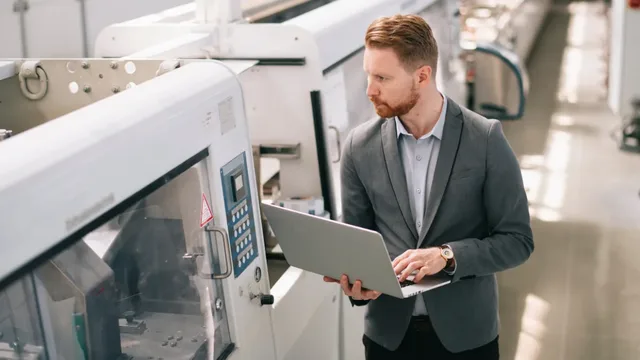
Image Courtesy: Unsplash
Industry 4.0 automation can help Canadian manufacturing SMEs protect jobs, overcome labour shortages, and drive growth. Success depends on preparing people rather than just buying technology. Manufacturers must redesign roles, build practical skills in phases, hire for adaptability, and lead change transparently from the shop floor. Ultimately, automation is a leadership and workforce development challenge, not just a technical upgrade.
Preparing Canada’s Manufacturing Workforce for the Industry 4.0 Era
Robotics, artificial intelligence, sensors, networked equipment, machine vision, digital twins, and data platforms are common terms for Industry 4.0 technology. However, for Canadian manufacturers, the success of these investments will depend on the people who use them, not the technology itself. The concern that "robots replace workers" is legitimate, especially in an industry already dealing with labour shortages, rising costs, supply-chain pressure, and shifting trade conditions. However, automation can help SMEs protect and expand jobs by eliminating monotonous work, improving safety, creating new technical roles, and enabling teams to do more without relying entirely on more staff.
Canada's sophisticated manufacturing workforce is now a national policy priority. In August 2026, the federal government established the Advanced Manufacturing Workforce Alliance in collaboration with Next Generation Manufacturing Canada, the Excellence in Manufacturing Consortium, and the Canadian Skills Training and Employment Coalition. The alliance aims to identify labour shortfalls, provide practical training, and help industries implement new technology while staying globally competitive.
Automation Changes Tasks, Not Just Jobs
Manufacturing leaders should avoid portraying automation as a simple choice between humans and machines. In practice, technology alters tasks. A robotic cell can take over repetitive lifting, welding, packaging, palletizing, and inspection tasks. Employees may also take on higher-value responsibilities such as production monitoring, exception resolution, equipment maintenance, process improvement, quality management, and data analysis to make faster choices.
The impact will vary by role. According to Statistics Canada research published in 2026, certified journeyperson occupations may be less vulnerable to AI-related employment transformation because much of their work is labour-intensive and specialized. However, some trades may face greater automation risk if their work is highly repetitive. According to the study, 20% of employees in journeyperson occupations may be at high risk of automation, compared to 13% of people in other occupations. For SMEs, the real question isn't whether automation will change work. The question is whether the corporation will prepare employees to succeed in the new roles it creates.
Redesign Roles Before Buying Technology
An automation project should begin with a work design rather than an equipment order. Before implementing a robot, digital workflow, or AI-powered production system, business owners should map the current process to determine which jobs are repetitive, physically tough, error-prone, dangerous, delayed, or reliant on limited skills. This activity can help determine which activities to automate and which to keep human-led. It can also reveal opportunities to restructure positions, so staff are more accountable for quality, troubleshooting, customer responsiveness, process improvement, and equipment reliability.
For example, a worker currently assigned to repetitive packaging may be given responsibility for installing automated equipment, evaluating product quality, responding to exceptions, and collecting production data. This is not a decrease in value. It shifts from manual repetition to operational ownership. Employees should be involved from the start, especially operators, maintenance technicians, quality specialists, and shift supervisors. They frequently understand process restrictions that an external technology vendor may not recognize.
Build Skills in Layers
Not every employee has to be a programmer or a data scientist. Canadian manufacturing SMEs can build digital capabilities in phases, starting with the skills needed to use technology securely and effectively. Frontline employees may require training in basic digital interfaces, data entry, viewing dashboards, responding to alarms, and determining when an automated system requires human involvement. Maintenance teams may require more advanced knowledge of sensors, programmable logic controllers, robotics, troubleshooting, cybersecurity, and predictive maintenance. Supervisors and managers may need training in data interpretation, performance measurement, change management, and evidence-based decision-making.
Canadian workers' adoption of AI and automation remains inconsistent. In March 2026, 41.6% of workers reported employing at least one AI or automation technology in their primary job or business over the previous year. However, use was substantially lower in trades, transportation, and equipment operators, with only 14.7% reporting utilizing generative AI. Because of this mismatch, manufacturing businesses must prioritize customized, hands-on training.
Recruit for Adaptability, Not Only Credentials
Manufacturers frequently compete for scarce engineers, programmers, automation specialists, and cybersecurity experts. Small and medium-sized enterprises (SMEs) may not be able to outbid larger employers. Still, they can compete by offering meaningful hands-on work, rapid responsibility, flexible career paths, and visible opportunities to learn. Owners should hire for problem-solving skills, mechanical aptitude, curiosity, dependability, and a willingness to learn, not just a specific set of qualifications. A maintenance professional who understands equipment and is interested in digital systems could be a great candidate for robotics or industrial Internet of Things training. An experienced operator with extensive process expertise could be a helpful quality-data or production-analytics lead.
Collaborations with colleges, polytechnics, unions, local workforce agencies, and technology providers can also result in useful talent pipelines. The federal Workforce Alliances concept brings together businesses, unions, training institutions, industry associations, Indigenous partners, and underrepresented groups to address skill gaps and develop sector-specific solutions.
Lead Change From the Shop Floor
When employees believe choices are made around them rather than for them, technology adoption fails. Owners and senior management must explain why the company is investing, what business challenge it is attempting to solve, how roles may change, and what support employees will receive. The message should be specific. Instead of saying, "We're bringing in AI," describe how the organization is attempting to reduce injury risk, eliminate machine downtime, increase delivery reliability, or relieve experienced staff of repetitive tasks. Be open about uncertainties, solicit concerns, and show that employee opinion will influence the launch.
Employee demos, pilot participation, pre-go-live training, designated floor-level advocates, regular check-ins, and a clear means to report difficulties are all components of an effective change-management strategy. Leaders should also acknowledge employees who help improve the new system, rather than seeing implementation solely as the responsibility of consultants or IT teams. Successful transformation builds trust through observable actions such as improved training, safer processes, transparent communication, and shared accountability for outcomes.
Make Automation a Growth Strategy
Automation is most effective when it complements a growth strategy. It can help a manufacturer take on larger orders, improve consistency, shorten lead times, operate more safely, reduce waste, and compete in markets where customers demand high quality and consistent delivery. According to Canada's Workforce Alliances backgrounder, 89% of surveyed advanced manufacturing enterprises indicated benefits from smart technology, including predictive analytics and the Industrial Internet of Things.
For SMEs, the goal should be to leverage technology to maximize the value each employee provides, rather than seeing people as costs to be eliminated. The most robust manufacturers will combine cutting-edge tools with skilled, dependable, and constantly evolving people.
The Bottom Line
Canada's next generation of manufacturers will fail because they have the most sophisticated technologies. They will be successful because they prepared people to work differently, reimagined jobs with purpose, developed practical skills, and led change transparently. For SMEs, Industry 4.0 is ultimately a leadership challenge. Companies that view automation as a tool for safer work, better jobs, higher output, and long-term growth will be better positioned to compete.
CanadianSME Small Business Magazine shares practical insights, business developments, and entrepreneurial stories from across Canada. Subscribe to our monthly editions for updates on Canadian businesses, and follow @canadian_sme on X for current business trends.
Disclaimer: This article is based on publicly available information and is intended for informational purposes only. CanadianSME Small Business Magazine does not endorse or guarantee any products or services mentioned. Readers should conduct independent research and due diligence before making business decisions.