Small Change, Bigger Picture: Rethinking Year-End Tax Planning for Entrepreneurs

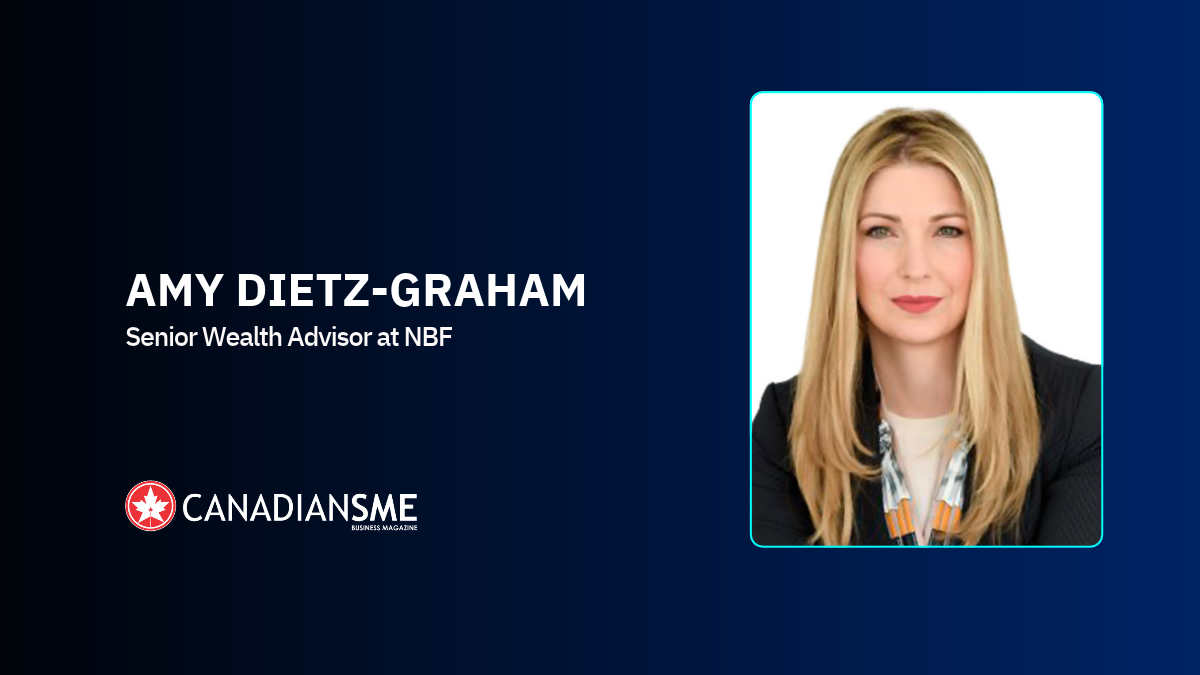
In an exclusive interview with CanadianSME Small Business Magazine, Amy Dietz-Graham, Senior Wealth Advisor at NBF, shares why entrepreneurs should approach year-end tax planning with their long-term goals in mind. She discusses compensation choices, corporate investments, and preparing for a future business sale, highlighting how collaboration among financial, tax, and legal advisors can help owners connect business growth with personal wealth and succession planning.
Amy holds a Bachelor of Science from the University of Western Ontario with a double major in Financial Economics and Applied Mathematical Methods. Amy has obtained her Canadian Investment Manager (CIM) designation. Amy is also a Fellow of the Canadian Securities Institute (FSCI).
Amy provides conservative wealth management services to her clients, including financial and estate planning and investment advice. Amy also consults with organizations in the construction and implementation of their investment policy statements. Amy is well known for her ability to help clients understand complex financial concepts in terms that make sense to them.
Why shouldn’t business owners treat the $500,000 small-business tax threshold as a ceiling on growth?
I always find it interesting when business owners start making decisions around tax thresholds rather than what's best for their business.
It's a classic case of letting the tax tail wag the investment dog!
The $500,000 small-business limit isn't a ceiling on growth. It's simply the amount of qualifying active business income that may benefit from the lower small-business corporate tax rate. Once you exceed that threshold, additional income is generally taxed at a higher rate, but that doesn't mean growing your business suddenly becomes less worthwhile.
I often remind entrepreneurs that paying more tax because you're making more money isn't necessarily a bad problem to have!
Imagine turning down a great business opportunity simply because it might push you into a higher tax bracket. You could be leaving far more money on the table than you're saving in taxes.
The bigger question is what you're building. Are you hiring, expanding, investing in innovation or preparing for an eventual sale?
Tax planning should be the GPS helping you reach your destination, not the roadblock preventing you from getting there.
What should owners weigh when choosing between salary, dividends, or a combination of both?
This is one of those decisions where there really isn't a one-size-fits-all answer.
I like to think of salary and dividends as two different tools in the financial toolbox. Neither is inherently better. It depends on the job you're trying to accomplish.
Salary creates RRSP contribution room and CPP participation, while dividends offer flexibility without CPP contributions. But choosing between them based solely on this year's tax bill can mean overlooking the bigger picture.
Are you building wealth? Approaching retirement? Planning a business sale? Or thinking about how to transfer wealth to the next generation?
We also need to consider corporate cash flow, personal investments, family circumstances and future retirement income.
Sometimes saving a dollar in tax today can cost you more down the road.
That's why I encourage entrepreneurs to look beyond the immediate savings and consider how today's decisions affect their financial future.
The goal isn't to win the tax game for one year. It's to build a strategy that wins over a lifetime.
How can holding passive investments inside a corporation affect an owner’s broader tax and wealth plan?
For many successful entrepreneurs, the business eventually generates more cash than they need to operate. That's a great problem to have, but what you do with that cash matters.
I often compare building wealth inside a corporation without an exit strategy to building a beautiful house without thinking about where the doors go. Eventually, you need a way out!
Passive investment income earned inside a corporation can have tax implications, including potentially reducing access to the small-business deduction when certain thresholds are exceeded.
But that doesn't mean business owners should avoid investing corporately. It means they need to be thoughtful about what they own, the income those investments generate and how those assets fit into their broader financial plan.
We also need to consider whether a future business sale may qualify for the lifetime capital gains exemption.
Building wealth is only half the equation. How and when you access that wealth can be just as important.
That's why tax planning, investment management and business succession planning really need to work together. Connecting your professionals can help you in big ways overall in your financial plan.
What overlooked tax-planning opportunities should owners discuss with their advisors before year-end?
Year-end tax planning can sometimes feel like a mad dash to find deductions before December 31st. But I encourage business owners to look beyond the rearview mirror and spend some time looking through the windshield.
Where is the business headed, and is the financial plan keeping pace?
Start with corporate cash flow. Is excess cash sitting idle? Are capital expenditures planned? Does your salary and dividend strategy still make sense?
Review investment portfolios for tax-loss harvesting opportunities and consider charitable giving. Donating appreciated publicly traded securities in kind can be a particularly effective strategy.
Retirement planning is another area that often gets overlooked. Entrepreneurs can become so focused on building their businesses that their personal financial plans take a back seat.
And if a business sale is on the horizon, don't wait until there's an offer on the table to start planning.
One of the biggest missed opportunities is treating tax planning, investment management and financial planning as three separate conversations.
The magic often happens when you connect the dots.
Your team emphasizes financial literacy. Can you share an anonymized example of how looking beyond immediate tax savings helped an entrepreneur make a better long-term decision?
One example that comes to mind is a family-owned business where the founder was the sole shareholder, despite other family members being actively involved in building and growing the company.
Through proactive planning, we identified an opportunity to restructure the ownership well in advance of an eventual sale, allowing eligible family members to potentially benefit from their own lifetime capital gains exemptions.
The result? The opportunity to save the family millions of dollars in taxes.
But here’s the important part. This wasn’t something that could simply be put together when a buyer came knocking. The restructuring was undertaken more than two years before the sale, allowing time to address the relevant tax requirements.
I often say that you can’t still be building the runway when the plane is already landing!
This is why ongoing conversations with your accountant, corporate lawyer and investment advisor are so important-a big part of my practice is connecting these professionals as we work through a financial plan. When these professionals work together, opportunities emerge that might otherwise be missed
Great planning isn’t just about what you save today. Sometimes it’s about the opportunities you create for tomorrow.
Disclaimer:
The information contained herein has been prepared by Amy Dietz-Graham a Senior Wealth Advisor at NBF. The opinions expressed do not necessarily reflect those of NBF.
The views and opinions expressed in this interview are those of the interviewee and do not necessarily reflect the official policy or position of CanadianSME Small Business Magazine. Our platform is dedicated to fostering dialogue and sharing insights that inspire and empower small and medium-sized businesses across Canada.