

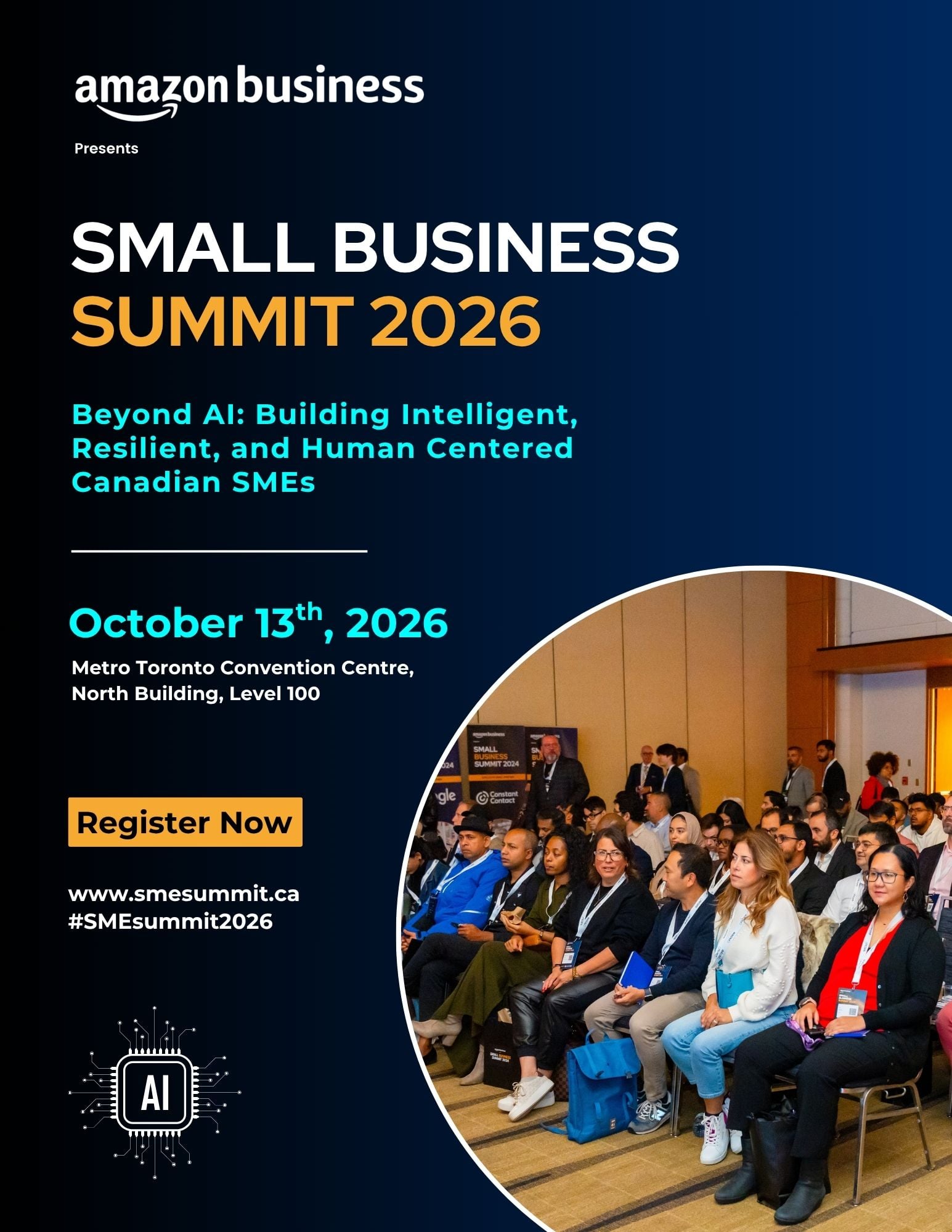


By 2030, Canadian small and medium-sized firms (SMEs) will work in a landscape characterized by edge AI, generative design, robotics, and spatial computing, all built on top of cloud, data, and connectivity. With national talks centred on themes such as “Beyond AI: Building Intelligent, Resilient, Human-Centered Canadian SMEs,” the next decade will be about transforming new technologies into practical tools that help ordinary businesses, rather than headline-grabbing experiments.
Edge AI: Intelligence at the Local Level
Edge AI brings processing power and machine learning closer to where data is generated—on shop floors, in vehicles, and on devices—rather than depending entirely on remote cloud servers. In Canada, growth in edge computing and 5G is expected to enable real-time applications in areas such as manufacturing, shipping, retail, and resource industries.
Edge AI will benefit SMEs by enabling real-time quality monitoring in small factories, predictive equipment maintenance, smart security cameras, and responsive in-store experiences that run on local hardware. According to market research, Canada’s edge computing market will develop significantly by 2031, driven by investments in 5G standalone networks and private edge solutions. The upshot for small enterprises is that they can deploy AI-driven insights without relying on high-bandwidth cloud connections, which improves resilience in rural and industrial settings.
Generative Design and Automation in Product and Process Innovation
Generative design employs artificial intelligence algorithms to explore hundreds of design choices based on constraints, helping firms develop more efficient products and processes. While frequently associated with major corporations, Canadian SMEs in manufacturing, construction, and digital design are beginning to tap into these capabilities through cloud platforms and specialized software.
By 2030, generative approaches are expected to affect how small businesses prototype products, plan layouts, and optimize workflows, using simulation and AI to test ideas before investing in physical changes. When combined with automation and low-code platforms, generative tools can help SMEs iterate quicker, eliminate waste, and respond more rapidly to changing client needs. Access to shared AI compute facilities and research budgets, such as Canada’s AI-focused plans, will be critical in ensuring that advanced generative capabilities are not restricted to huge enterprises.
Robotics and Physical Automation for SMEs
Robotics is expanding beyond automotive factories and massive warehouses to smaller, more flexible installations that are available to small and medium-sized enterprises. Robotics and automation are highlighted in Canadian tech roadmaps as significant components of digital transformation, particularly in areas where labour shortages, safety restrictions, or repetitive tasks make automation appealing.
Collaborative robots (“cobots”) can help small manufacturers, logistics operators, and even retail and hospitality firms with chores such as packing, sorting, cleaning, and rudimentary assembly, while humans focus on higher-value jobs. Edge AI and private 5G networks improve these systems by enabling real-time awareness and control while maintaining performance. Over the next decade, Canadian SMEs will likely see more robotics systems designed specifically for smaller footprints, modular deployments, and subscription models, making automation more affordable for mid-sized and small operations.
Spatial Computing: Blending Physical and Digital Experiences
Spatial computing integrates digital data with the real world in real time, enabling interactions through augmented reality (AR), virtual reality (VR), and mixed reality. It enables businesses to add information to physical spaces, simulate environments, and create immersive experiences for training, design, marketing, and consumer engagement.
Canadian SMEs in retail, tourism, education, and professional services stand to benefit from spatial computing as headsets, smart glasses, and AR-enabled gadgets become more widely available and inexpensive. Examples of applications include virtual product trials, interactive retail layouts, remote site inspections, and immersive brand storytelling. Small businesses would benefit most from user-friendly systems that integrate with existing content and data, minimizing the need for in-house 3D development expertise. As spatial interfaces improve, they may become a component of everyday collaboration and consumer engagement, just like video conferencing did in the previous decade.
Innovation Hubs, Universities, and Accelerators Preparing SMEs
The Canadian innovation ecosystem, which includes universities, accelerators, and technology hubs, is already investing in research and commercialization channels for these future technologies. University-based accelerators, such as the University of Toronto’s entrepreneurial community, MaRS, and other regional hubs, provide support for science and technology firms, many of whom are developing edge, AI, robotics, and spatial computing solutions.
National and regional accelerator programs offer coaching, pilot opportunities, and investor access to early-stage businesses developing tools and services SMEs may use. Canadian Technology Accelerators (CTA), for example, help businesses explore global digital hubs while keeping innovation grounded in Canadian knowledge. As these enterprises mature, their products enter the SME market through SaaS offers, hardware solutions, and partnership formats, allowing small businesses to adopt advanced technology without becoming primary developers.
Universities and research groups also produce roadmaps and horizon-scanning reports to help governments and businesses understand long-term trends and plan accordingly. These findings underline the importance of investing in internet, cloud infrastructure, AI compute, and digital skills to ensure inclusive SME participation in future innovation ecosystems.
Preparing Canadian SMEs for 2030
For Canadian SMEs, preparing for future tech trends entails developing expertise and partnerships rather than predicting specific goods. Practical steps for the remainder of the decade include:
- Strengthening digital foundations by implementing cloud-first initiatives, strong cybersecurity, and data policies that promote AI and automation.
- Experimenting with accessible AI and automation: Begin with small-scale pilots in analytics, content development, and workflow automation to gain experience.
- Monitoring edge and spatial opportunities: Look for industry-specific solutions that make edge AI, robotics, or spatial computing more accessible.
- Participating in programmes, events, and collaborations that expose SMEs to innovative technologies and talent.
By 2030, the most resilient Canadian SMEs will be those who view future technology as an expanding toolkit, picking and integrating edge AI, generative design, robotics, and spatial computing where they may directly benefit consumers, employees, and long-term strategy.
Your role in staying up to date is integral to our shared mission of fostering a community of innovators. CanadianSME Magazine is a valuable treasure trove of entrepreneurial knowledge. Click here to subscribe to our monthly editions for updates on Canadian businesses. Follow our handle, @canadian_sme, on X to stay updated on all business trends and developments. Your support is crucial to our mission.
Disclaimer: This article is based on publicly available information and is intended only for informational purposes. CanadianSME Small Business Magazine does not endorse or guarantee any products or services mentioned. Readers are advised to conduct their research and due diligence before making business decisions.


