What Happens to Institutional Knowledge When “That” Employee Leaves

Institutional knowledge shouldn't live in one person's head. Why "Ask Jim" Isn't a Strategy No one notices something...
Institutional knowledge shouldn’t live in one person’s head.
Why “Ask Jim” Isn’t a Strategy
No one notices something until it’s gone. The summer sun is easy to take for granted until it rains. The Wi-Fi is invisible until it goes out. And the go-to person on your team gets relied on for answers right up until the day they can’t be reached.
Every team has one. Let’s call them Jim. Jim has been around long enough that they just know things. Which customer has particular preferences or agreements. Why a certain process gets done a certain way. Who to call when there is a particular fire to put out. None of it is written down anywhere. It’s in Jim’s head.
Then one day, Jim hands in their notice, or retires, or finally takes that long-overdue vacation. What then?
Suddenly, the person everyone routes through can’t be reached. And the scramble that follows isn’t really about backfilling a role or finding coverage. It’s realizing how much institutional knowledge was living in one person’s memory the whole time.
The Knowledge That Never Made It Into a System
Most organizations are good at documenting what’s easy to document: policies, procedures, products/pricing, the org chart. What rarely gets written down is the operational knowledge, the workarounds, the context, the “here’s actually how this works” that accumulates over years on the job.
That knowledge never feels urgent to capture, right up until the person holding it walks out the door. Then it’s gone, and everyone else is left reconstructing it from memory, old emails, and guesswork.
How Your Tech Either Helps or Hinders
Think about how information actually moves through your organization today. Does it live in one centralized place, or is it scattered across shared drives, inboxes, and chat threads with limited visibility or access?
If someone wanted to update a document to reflect how a process actually works now, how easy would that be? Would they know where it lives? Could they make the change themselves, or does it have to go through IT first?
That friction matters because if your systems are hard to update, people stop updating them. And if the information is already hard to contextualize or changes quickly, every extra layer of complexity shrinks the odds it ever gets captured at all.
The more complicated your systems are to navigate, the more likely your team is to take a shortcut instead: an ad hoc folder that gets forgotten, a workaround that only one person understands, or simply going back to asking Jim.
If the official system isn’t the path of least resistance to an answer, your team won’t stay on it for long.
AI Won’t Fix What Was Never Captured
There’s a lot of talk right now about AI helping organizations find information faster, and I think that’s genuinely true. AI is a useful tool for surfacing what an organization already knows.
But AI can’t surface knowledge that was never captured in the first place. It can search a document. It can’t search someone’s head after they’ve left. If the goal is actually protecting institutional knowledge, the work has to happen before it’s missing, not after.
AI is an enablement layer on top of good habits, not a replacement for them.
The Real Cost
People are an organizations’ biggest asset; I have always believed that, and this doesn’t change that value. But when institutional knowledge lives in one person, a business isn’t just vulnerable to turnover. It’s slower, more inconsistent, and more dependent on memory than it needs to be. New employees take longer to get up to speed. Customers get different answers depending on who they happen to reach. And every departure, planned or not, becomes a small crisis instead of a normal transition.
Then think about what it’s actually like to be Jim. Think about how much of their day goes to answering the same questions over and over, because the answer has nowhere to live once they give it. Next week, someone else will ask the exact same thing, and the cycle starts again.
Jim deserves their time back too, so they can do work that drives new value, work that actually matters to them and the organization. Or just take the vacation peacefully.
About Author
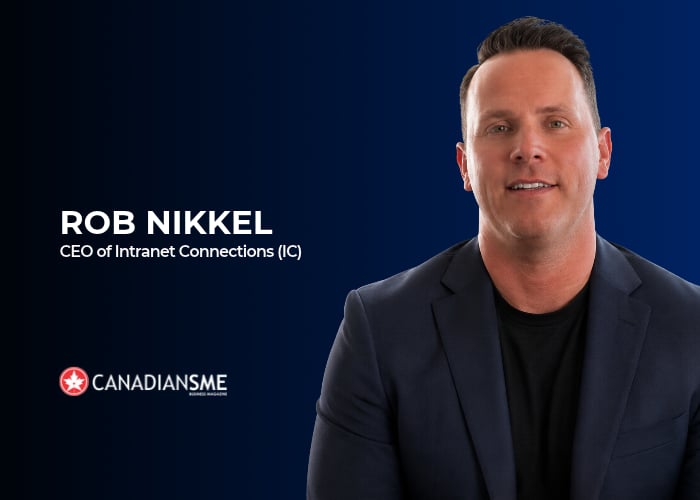
Rob Nikkel is CEO of Intranet Connections (IC), an intranet software company that has spent more than 25 years helping regulated and operations-driven organizations create more connected, informed, and aligned workplaces.
With over 20 years of leadership experience in the digital workplace space, Rob is recognized for his practical and people-centered approach to technology. Under his leadership, IC has evolved into a trusted partner for financial institutions, healthcare organizations, and government agencies seeking to improve internal communication, governance, compliance, and employee experience through intuitive, purpose-built technology.
Rob is a frequent voice on topics including digital workplace strategy, internal communication, operational alignment, workplace culture, compliance, and the evolving role of technology in helping organizations stay connected in increasingly fragmented environments. His perspective is grounded in the belief that technology should simplify work, strengthen communication, and help people do their jobs better.
Known for his approachable leadership style and ability to translate complex challenges into practical insights, Rob brings a thoughtful and relatable perspective to conversations around the future of work and connected workplaces.
Outside of work, Rob is a proud father of three and a lifelong hockey enthusiast.
Rob Nikkel is CEO of Intranet Connections (IC), an intranet software company that has spent more than 25 years helping regulated and operations-driven organizations create more connected, informed, and aligned workplaces. With over 20 years of leadership experience in the digital workplace space, Rob is recognized for his practical and people-centered approach to technology. Under his leadership, IC has evolved into a trusted partner for financial institutions, healthcare organizations, and government agencies seeking to improve internal communication, governance, compliance, and employee experience through intuitive, purpose-built technology.
View profile →