Building Beyond Borders: How Adventure Outdoors Is Using Technology to Scale a Canadian Business
In this exclusive feature, Uzzi Sultoni, Founder of Adventure Outdoors, shares how he built a multi-award-winning Canadian outdoor...

Ahmed Khanani (3)
- Adventure Outdoors uses AI and automation for chat, phone support, follow-ups and self-guided rentals, so staff can spend more time on complex customer needs.
- Sultoni says a strong supply chain rests on supplier relationships, sales and inventory data, and clear, proactive communication about backorders, not simply on carrying more inventory.
- His advice to young entrepreneurs is to start before feeling ready, think big while starting small, and accept calculated risk and failure.
In this article5 sections
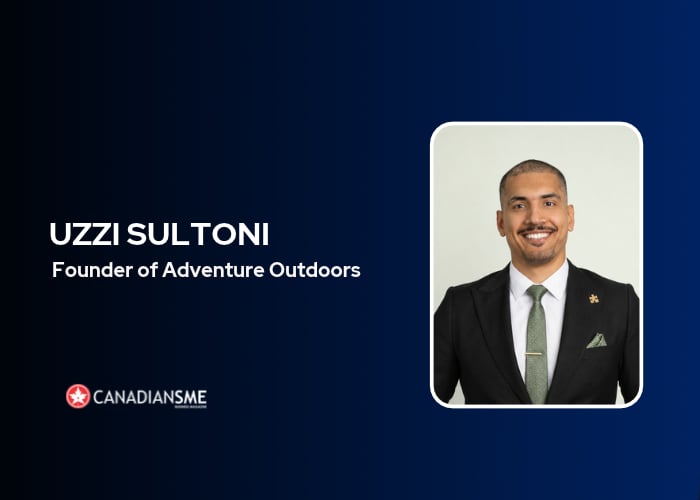
In this exclusive feature, Uzzi Sultoni, Founder of Adventure Outdoors, shares how he built a multi-award-winning Canadian outdoor retail and e-commerce company by combining technology, AI, automation, and hands-on customer service. He was also selected to represent Canada at the G20 Young Entrepreneurs’ Alliance Summit in 2025 and 2026.
Uzzi discusses scaling e-commerce, building reliable supply chains, and creating personalized customer experiences. He also shares how he is expanding into new ventures, including GullWing Caps, with a growing focus on international manufacturing, partnerships, and global market expansion.
How are AI, automation, and e-commerce helping Adventure Outdoors deliver a more personalized customer experience?
At Adventure Outdoors, we use AI, automation, and e-commerce to make the customer journey more personalized, convenient, and transparent from the first interaction through post-purchase support.
We have integrated AI into our chat and phone systems to help customers receive faster, more relevant support, while AI agents automate aspects of customer service and assist our team throughout the sales cycle. This allows us to respond more efficiently while still providing personalized human support when it matters.
Automation extends across our operations. Our rental platform is designed to be completely self-guided, allowing customers to browse availability, reserve equipment, complete required information, and manage their rental experience digitally. We also automate follow-up communications, customer engagement, marketing, and other repetitive processes so our team can spend more time building relationships and solving complex customer needs.
Our e-commerce platform brings everything together by providing an easy-to-navigate and transparent shopping experience, with clear product information and purchasing options. Ultimately, we use technology not to replace the human experience, but to remove friction and give every customer a more seamless and confident journey.

What does it take to build a reliable supply chain while scaling a retail business that sells specialized outdoor and vehicle-adventure equipment?
Starting a business is one challenge, but sustaining it is often the bigger one. Building a reliable supply chain in our industry requires balancing availability, accuracy, and strong supplier relationships. We sell specialized products where the right product must fit the right vehicle and customer use case, so an inventory mistake is not simply an inconvenience – it can directly affect the customer’s experience.
As Adventure Outdoors has scaled, we have focused on building strong relationships with manufacturers and distributors, diversifying our supplier network, and using sales and inventory data to make better purchasing decisions. Seasonality is also significant in the outdoor industry, so forecasting demand while maintaining healthy inventory levels and cash flow requires constant attention.
We also believe transparency is essential. When products are backordered or have longer lead times, communicating that clearly and proactively helps maintain customer trust. Most importantly, scaling has taught us that a strong supply chain is built on systems and relationships, not simply carrying more inventory. Our goal is to use technology, data, and closer supplier partnerships to anticipate demand, improve availability, and create a supply chain that can scale alongside the business without compromising the customer experience.
How did you grow Adventure Outdoors from solving a local customer problem into a business with national and international ambitions?
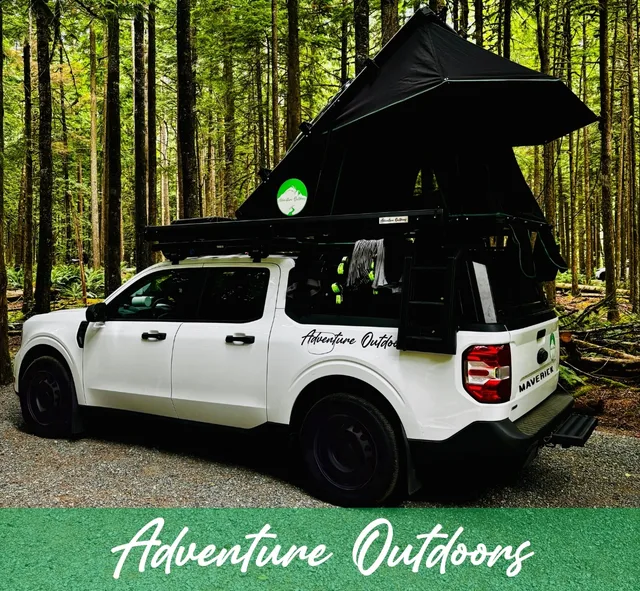
Adventure Outdoors started by solving a very practical local problem: making it easier for people to access the right outdoor and vehicle-adventure equipment without the confusion that often comes with product compatibility, installation, and cost.
In the beginning, I was involved in almost every part of the business, from sales and installations to customer service, marketing, and operations. That hands-on experience gave me a deep understanding of our customers and, more importantly, showed me which challenges could be solved through better systems and technology.
As demand grew, we expanded our e-commerce capabilities, supplier relationships, product selection, and automation, allowing us to serve customers well beyond our local market. My mindset also shifted from asking, “How do we grow this store?” to “How do we build a company and systems that can scale?”
Today, our ambitions extend across Canada and increasingly into international markets. Support from organizations like Futurpreneur has also been valuable in helping me think beyond the startup stage and focus on what it takes to build and grow a sustainable business. The biggest lesson has been that scaling means building better technology, processes, partnerships, and teams so you can solve that problem for significantly more people.
What did representing Canada at the G20 Young Entrepreneurs’ Alliance Summit teach you about building global partnerships and competing internationally?
Representing Canada at the G20 Young Entrepreneurs’ Alliance Summit reinforced that building internationally starts with relationships. Meeting entrepreneurs, business leaders, and policymakers from different countries showed me how much opportunity can emerge when you step outside your home market and understand how others approach business, innovation, manufacturing, and economic development.
One of my biggest takeaways was that Canadian companies have a strong reputation internationally, but we cannot rely on that alone. Competing globally requires ambition, un understanding of different markets, and genuine long-term partnerships.
The Summit also changed how I think about international expansion. Rather than viewing another country simply as a market to sell into, I now look at how we can build mutually beneficial relationships through distribution, manufacturing, investment, and knowledge sharing.
Most importantly, representing Canada twice taught me to think bigger. Through the G20 YEA Summits and Futurpreneur, I’ve been able to build international connections that are now helping me explore manufacturing opportunities for my next venture, GullWing Caps, including in Bulgaria and other global markets. That experience has encouraged me to build businesses with a global perspective from the outset while continuing to create value and opportunity at home in Canada.

Image Courtesy:Adventure Outdoors
What advice would you give young entrepreneurs who have ambitious ideas but are hesitant to take their first step?
My biggest advice is to start before you feel completely ready. Ambitious ideas can become intimidating when you focus on everything required to reach the end goal. Instead, focus on the first meaningful step you can take today.
When I started my entrepreneurial journey, I did not have every answer, or a perfect roadmap. Much of what I know today came from taking action, making mistakes, continuously improving.
Launching a business is one thing. Building it to last is another. That is also why support from organizations like Futurpreneur matters. Young entrepreneurs need more than funding alone: mentorship, guidance, and human support can be critical to long-term success.
I also believe in thinking big while starting small. Your long-term vision can be global, but your first step might be one customer, one product, or solving one problem well. Once you create value for one person, you can begin building the systems, team, and technology to do it for thousands.
Finally, become comfortable with calculated risk and failure. Not every decision will work, but every experience gives you information. You do not need to see the entire staircase – just enough conviction to take the next step.
Disclaimer:
The views and opinions expressed in this interview are those of the interviewee and do not necessarily reflect the official policy or position of CanadianSME Small Business Magazine. Our platform is dedicated to fostering dialogue and sharing insights that inspire and empower small and medium-sized businesses across Canada.
With an aim to contribute to the development of Canada’s Small and Medium Enterprises (SME’s), Cmarketing Inc is a potential marketing agency and a boutique business management company progressing rapidly in its scope. By acknowledging a firm reliance of the Canadian economy over its SMEs, the agency has resolved to launch a magazine, the pure focus of which will be the furtherance of Canadian SMEs, and to assist their progress with the scheduled token of enlightenment via the magazine’s pertinent content.
View profile →