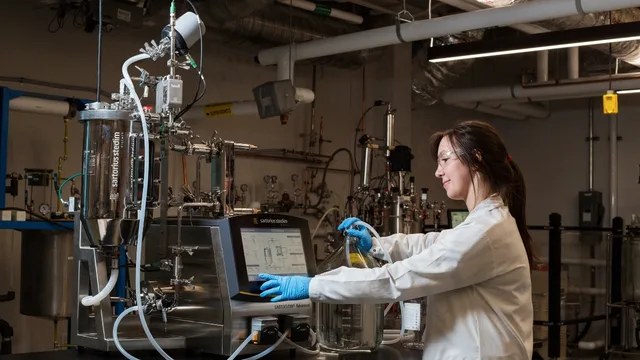
What a Small Shop Can Quote Is Decided by the Machine It Bought Three Years Ago

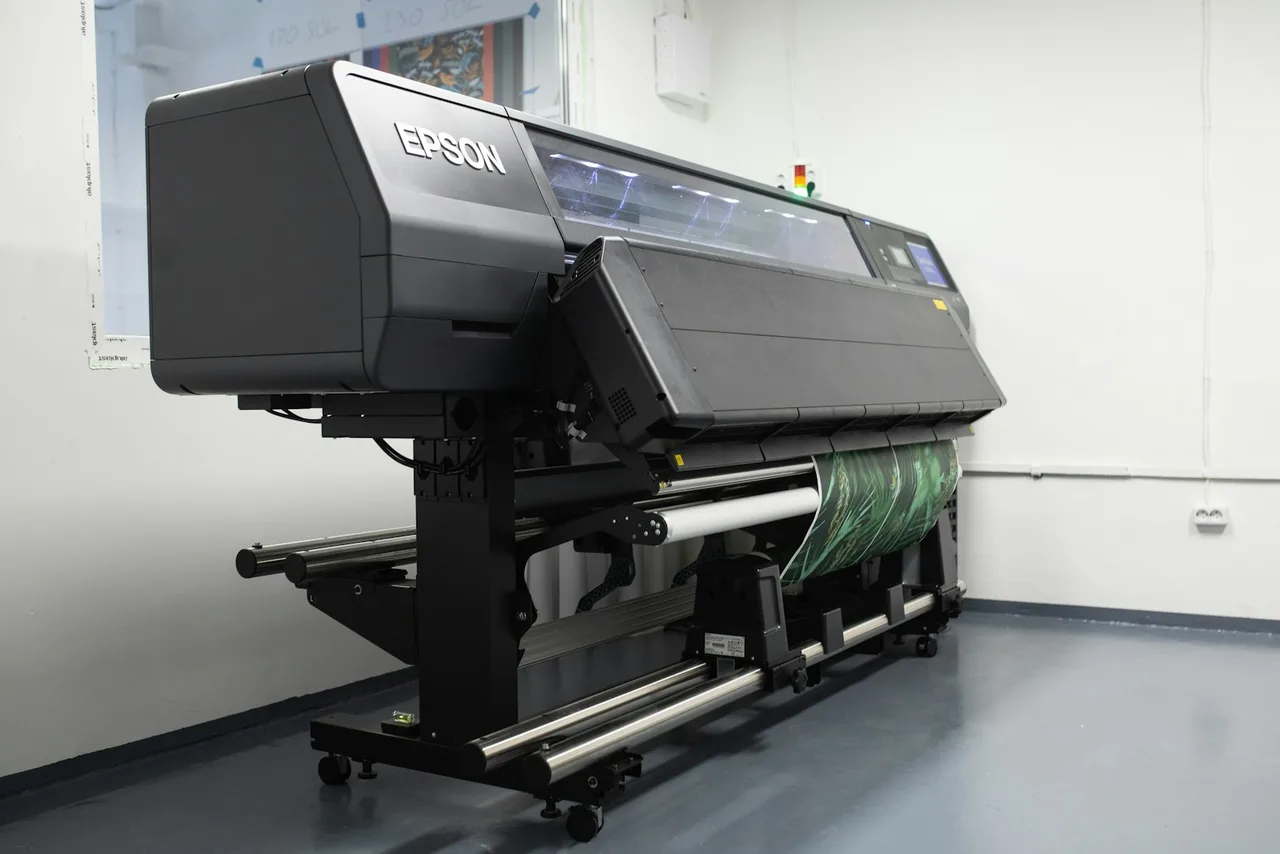
Image courtesy: Jakub Żerdzicki / Unsplash
A print, sign or apparel shop’s quoting ceiling is set by the equipment it bought years ago. Using Epson’s 2026 lineup as a map, here is how Canadian owners can plan their next machine purchase.
A sign shop in Burlington turns down a job for rigid panels because its printer handles roll media only. An apparel decorator in Winnipeg passes on 60 custom shirts because the run sits awkwardly between what screen printing can produce economically and what a single direct-to-garment (DTG) unit can produce in a day. A photo studio loses a gallery commission because it cannot meet the required turnaround time. None of these are sales problems. They are the consequence of a capital investment decision made some years earlier, and in small production businesses, that decision quietly sets the ceiling on what can be sold.
The equipment ladder, from studio to production floor
The equipment market that determines those ceilings is more varied than most owners outside the trade realize. Epson’s lineup at the PRINTING United Expo in Las Vegas in September 2026 offered a snapshot of the progression. At the entry level are compact dye-sublimation units suited to a studio or a back-room operation. The next step brings the 44-inch and 64-inch machines designed for high-volume textile production. DTG and direct-to-film (DTFilm) equipment expands apparel capabilities through both hybrid and dedicated platforms, while larger DTFilm models automate the maintenance burden. Signage production is served by 64-inch solvent printers, with flatbed UV systems extending output to rigid substrates. Separate branches cover resin printing, fine-art reproduction and proofing, photographic minilab output, and wide-format technical drawings.
One product pairing in that announcement deserves particular attention because it addresses where many small shops actually lose money. A print-and-cut version of the 64-inch solvent printer ships matched with a cutter, and Epson highlights same-day lamination. In practice, print quality is rarely what separates competitors in this market. Finishing capacity and turnaround do. A shop that can print, laminate and cut in a single day prices differently from one that sends the work out or waits overnight. The advantage compounds across every job rather than appearing on any single one.
The company behind the equipment
Seiko Epson Corporation is a Japanese business founded in 1942, headquartered in Suwa, Nagano, and listed on the Tokyo Stock Exchange under code 6724. It reported revenue of 1,413,251 million yen for the financial year ended March 31, 2026, an increase of 3.7 per cent, and employed 75,352 people on a consolidated basis as at March 31, 2025. Junkichi Yoshida is president and chief executive officer. It is neither Canadian nor a small or medium-sized enterprise.
Its Canadian arm is more substantial than the brand suggests. Epson Canada operates from 185 Renfrew Drive in Markham, Ontario, and the parent company’s own listing of its global operations records the Canadian entity three separate times: as a sales and service subsidiary in Ontario, as a research site described as the Vancouver Design Center, and as a development centre in Ontario. A Japanese printing manufacturer running two Canadian research sites is not what most people picture when they see the brand on an office printer, and the company publishes very little about either.
Check Canadian pricing and availability separately
A caution about where Canadian buyers get their information. The PRINTING United announcement was issued from Epson America’s office in California and hosted on the Canadian newsroom without Canadian content, pricing or availability dates. That pattern is common across the Canadian site, and the practical consequence is that a Canadian buyer reading a product launch should confirm Canadian availability, Canadian pricing and Canadian warranty terms separately rather than assuming the announcement applies here unchanged.
Canadian businesses buy this equipment through resellers rather than from Epson directly, with the company directing commercial buyers to distributors including CDW, Compugen, Grand & Toy and Insight. Epson splits its business sales structure by volume, handling buyers of up to 50 units a year separately from those above, which signals to a smaller buyer which conversation they are entering. For wide-format equipment specifically, the company opened a certified solution centre at TG Graphics in Toronto in 2019, giving prospective buyers hands-on access to machines before purchase.
Four things for Canadian small businesses to do before buying
Four things follow for Canadian small and medium-sized businesses, and the first is an exercise rather than an observation. Most production shops have never written down what they turned away and why. Doing so for a quarter produces a list that usually clusters around two or three specific capability gaps, and that list is a far better basis for an equipment decision than a salesperson’s demonstration. It also sometimes shows that the gap is scheduling rather than capability, which is a much cheaper problem to solve.
The second concerns where the margin actually sits. In print, apparel and signage, the competitive ground is finishing, turnaround and the ability to take awkward jobs, not output quality, which has been good enough across the category for years. Equipment that shortens the path from printed to finished tends to pay back faster than equipment that prints more impressively.
The third is about evaluation. Production equipment cannot be assessed from a specification sheet, which is precisely why certified demonstration centres exist. A buyer should insist on running their own files, their own substrates and their own awkward job on the machine before committing, and should ask to see it doing a changeover and a maintenance cycle rather than a showcase print.
The fourth is the question that gets skipped. The purchase price of a production printer is the smaller part of its cost. Ink, media, maintenance parts and the labour of cleaning cycles determine what each unit of output actually costs, and those figures decide whether a given job is profitable at the price the market pays. Any serious equipment conversation should produce a cost per square foot or per garment before it produces a quotation for the machine.
The ladder equipment makers publish is really a description of the decisions small producers face as they grow. Reading it as a map rather than a catalogue is the difference between buying a machine and buying a capability the order book has already shown a need for.