Building High‑Trust Teams Through Emotional Intelligence

Nadine's Background
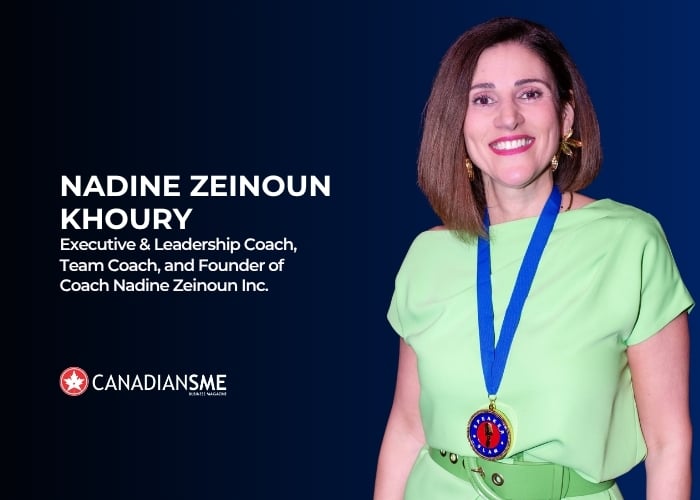
In an exclusive interview with CanadianSME Small Business Magazine, Nadine Zeinoun Khoury, Executive & Leadership Coach, Team Coach, and Founder of Coach Nadine Zeinoun Inc., shares how emotional intelligence, trust, and authentic leadership can transform workplaces and strengthen teams. Drawing from her extensive leadership experience, coaching practice, and journey through personal and professional challenges, Nadine explores what it takes to lead effectively in times of change and uncertainty.
Interview By SK Uddin
After achieving a BS degree in Chemistry and an MS degree in Pharmacology and Therapeutics from the American University of Beirut, Nadine gained over 15 years of extensive managerial experience in the corporate pharmaceutical sector, where she navigated complex challenges and developed a deep understanding of leadership within high-pressure environments.
Growing up during the civil war in Lebanon profoundly shaped Nadine’s perspective on leadership, resilience, and human connection. Experiencing uncertainty at a young age taught her the importance of trust, empathy, and strong relationships—values that continue to guide her work today and fuel her passion for helping leaders create environments where people feel safe, valued, and empowered.
Winning Speaker Slam
You recently won Speaker Slam, which celebrates powerful, purpose‑driven storytelling. What did you share on that stage, and how does that story capture who you are and why you chose to dedicate your work to emotional intelligence and leadership?
Winning Speaker Slam was incredibly meaningful because the story I shared, “The Road Less Travelled,” came from one of the most difficult moments of my career.
After more than a decade of promotions, awards, and giving so much of myself to an organization, I opened an email announcing a new structure, and my name wasn’t there. No conversation. No warning. No explanation.
I felt rejected, humiliated, and angry. The next day, I was supposed to lead an important product launch, and everything in me wanted to retaliate. Why should I show up for people who hadn’t shown up for me?
Then I realized: I couldn’t control what had been done to me, but I could control who I became because of it.
So I showed up.
That experience captures so much of who I am and why I do this work today. I learned that our emotions are real, but they don’t have to define our actions.
To me, that is emotional intelligence, and that is leadership: choosing your values over your reaction, your character over your circumstances, and who you want to be over what was done to you.
Seeing Beneath the Surface
Your path took you from a BS in Chemistry and an MS in Pharmacology and Therapeutics into more than 15 years of corporate pharmaceutical leadership, and now into executive and team coaching. How did those early experiences shape the way you understand disengaged teams and the real pressures leaders face today?
My scientific background taught me to look beneath the surface, to stay curious and understand what is really driving an outcome. My 15 years in pharmaceutical leadership taught me to do the same with people.
I experienced firsthand the pressures leaders face: delivering results, navigating change, managing competing priorities, and keeping teams engaged while carrying pressures they may never see.
And I learned, the hard way, that disengagement is rarely just a performance problem. There is usually something happening beneath the surface,lack of trust, fear, uncertainty, feeling unheard, or a leader who is so focused on delivering results that they’ve lost connection with their people.
I also learned that leadership can sometimes be lonely. Leaders are expected to have answers, remain composed, and inspire others, even when they themselves are struggling.
Those experiences profoundly shaped how I coach today. I don’t approach leaders with judgment; I approach them with curiosity. I understand the pressure because I’ve lived it.
My work is about helping leaders see what they may not see themselves, understand the emotional dynamics shaping their teams, and create environments where both people and performance can thrive.

Patterns Across Cultures
As President of the ICF Ottawa Chapter and an MCC coach who has worked with leaders across the Middle East, Europe, Africa, South America, and North America, what patterns do you see in the way leaders struggle with engagement, trust, and communication—no matter where they are in the world?
Having worked with leaders across five continents, one thing has become very clear to me: cultures may differ, but the human needs beneath leadership are remarkably similar.
Whether I’m coaching a leader in the Middle East, Europe, Africa, South America, or North America, I see the same patterns. People want to feel valued. They want to be heard. They want clarity, trust, and a sense that their work matters.
Yet under pressure, leaders often unintentionally create the opposite. Communication becomes more transactional. Listening decreases. Assumptions replace conversations. Leaders focus so intensely on results that they sometimes lose connection with the very people responsible for delivering them.
I’ve also seen that trust is rarely lost in one dramatic moment. More often, it erodes through small, repeated experiences, conversations avoided, expectations left unclear, commitments not followed through, or people feeling unseen.
The lesson for me is simple: leadership is deeply human.
Regardless of geography, engagement grows when people feel connected, trusted, and valued. And often, the smallest shift in how a leader shows up can create the biggest shift in how a team responds.
Coaching Disengaged Teams
Coach Nadine Zeinoun Inc. offers a blend of executive coaching, team coaching, trainings, workshops, and motivational talks, and you’ve just launched your “Authentic Influence” online program for leaders. When a leader comes to you with a “disengaged team” problem, how do you use tools like EQ-i, Conversational Intelligence, and your programs to turn that into a more harmonious, high‑performing culture?
When a leader comes to me with a “disengaged team,” I rarely start with the team. I start with curiosity: What is happening beneath the surface, and how might the leader be contributing to the dynamic without realizing it?
Tools like EQ-i 2.0 & 360, help leaders understand their emotional intelligence, their strengths, blind spots, and how they respond under pressure. Conversational Intelligence helps us examine the quality of their interactions: Are their conversations building trust and psychological safety, or unintentionally creating defensiveness and disconnection?
But awareness alone isn’t enough. Through coaching and programs like Authentic Influence, I help leaders translate those insights into everyday behaviours, how they listen, communicate, give feedback, navigate conflict, and create accountability while maintaining connection.
My goal isn’t to “fix” disengaged employees. It’s to help leaders create the conditions where people want to engage.
When leaders become more self-aware and intentional about how they show up, conversations change. Trust grows. People feel seen and valued. And over time, the culture shifts from one of compliance to one of connection, ownership, and high performance.
First Steps for Small Businesses
For small and mid‑sized businesses that may not have big HR teams, developing emotional intelligence and trust can feel like a “nice to have” instead of a necessity. What practical first steps would you recommend they take—and would you be open to offering our readers a simple free resource or introductory coaching session to help them get started?
For small and mid-sized businesses, emotional intelligence and trust aren’t “nice to have”, they directly influence communication, collaboration, engagement, and performance.
The good news is that developing them doesn’t require a large HR department. I recommend starting with three simple practices: listen, create clarity, and build connection. Have regular conversations with your people, be clear about expectations and priorities, and pay attention to how you show up as a leader, because your emotions and behaviours create a ripple effect across your team.
Most importantly, start with self-awareness. Before asking, “Why is my team disengaged?” ask, “What might I be doing, or not doing, that is contributing to this?”
To help your readers get started, I’d be delighted to offer two complimentary resources: my “Leading with Emotional Intelligence” guide, with practical strategies leaders can immediately apply to strengthen trust and engagement, as well as a complimentary introductory coaching session to explore a current leadership challenge and identify practical next steps.
Lead with Emotional Intelligence (Free Guide): https://www.coachnadinezeinoun.ca/emotional-intelligence-free-guide-921964
Complementary Coaching Session: https://www.coachnadinezeinoun.ca/nadine-30-minutes-session
Disclaimer:
The views and opinions expressed in this interview are those of the interviewee and do not necessarily reflect the official policy or position of CanadianSME Small Business Magazine. Our platform is dedicated to fostering dialogue and sharing insights that inspire and empower small and medium-sized businesses across Canada.