Building in Public: How Stan Creates Momentum


In an exclusive interview with CanadianSME Small Business Magazine, Vitalii Dodonov, Co-Founder and CTO of Stan, shares how building openly, listening closely to users, and creating alongside a community helped transform an early-stage idea into a fast-growing technology company. From launching products in public to helping creators build sustainable businesses, Vitalii discusses why transparency and trust are becoming essential advantages for modern founders.
Interview By SK Uddin
Vitalii is the Co-Founder and CTO of Stan. He led the company from zero to $30M ARR with a 30-person team, making Stan one of the highest-efficiency startups in its category. A visionary Founder and self-taught technologist, his leadership is rooted in first-principles thinking, top 1% talent density, and a conviction that most problems are solvable with clarity and disciplined effort.
At Stan, he builds the infrastructure that empowers Creator-Entrepreneurs to start and scale sustainable businesses. Originally from Russia and educated in Canada, Vitalii’s unconventional path, including more than 800 skydiving jumps, shapes his visionary yet practical approach to building technology that endures and genuinely supports the people who rely on it.
You helped grow Stan from zero to $30 million ARR with a 30‑person team, while serving more than 85,000 active users. How has building in public contributed to that growth, and why do you believe transparency is becoming such an effective customer‑acquisition strategy for startups?
Building in public has been core to Stan’s growth since day one. From the early days, we shared what we were building on TikTok and other platforms while my co-founder John was speaking directly with Creators every day, getting them to test what we were building. That brought more eyes to the product, but more importantly, it meant we weren’t building in isolation and could apply customer feedback to continue improving the customer experience. Additionally, people could see what we were working on and how the product was evolving.
I think transparency works well as a customer-acquisition strategy because trust is harder to earn than attention. Anyone can run an ad once they have a finished product, but when you share the process over time, people get to see how you think and what you actually care about. By the time you launch something, they’ve already been following along, and in some cases, feel like they’ve helped shape it. That’s a much stronger starting point for a customer relationship than just showing up and asking people to buy something.

Soon after your co‑founder John officiated your wedding, you both flew to London, gave yourselves 14 days to build and launch a new AI content tool, and documented the process as it happened. What did sharing both the wins and setbacks publicly teach you about building trust, attracting early adopters, and moving quickly without waiting for perfection?
We landed in London with a goal to ship something, but with no plan beyond those 14 days. We documented it daily, including the parts that weren’t going well, and by day 14 we’d launched to 250 paying customers. Most of them had been watching the whole two weeks unfold and were just waiting for the product to go live.
What surprised me was how much sharing the setbacks actually helped. When we hit a wall on day 6 and said so publicly, we didn’t lose people. We actually gained more attention. It made the whole thing feel like something they were part of, rather than something being sold to them.
The real observation for me was about speed. If you’re documenting as you go, you can’t hide behind “it’s not ready yet”, so you stop giving yourself that fallback. We shipped in 14 days because we’d publicly committed to 14 days.
Many early‑stage founders believe they need a finished product before they can build an audience. What practical steps can they take to start earning attention and community trust before launch—and how can they do it authentically rather than treating content as a promotional afterthought?
The first thing I’d say is don’t treat content as something you do after the product is finished. Start sharing what you’re learning while you’re building. Talk to potential customers, understand the problem as deeply as you can and share the questions you’re struggling with,
the decisions you’re making and even the things that don’t work. Start early, let people see the work and engage with the people you’re hoping to serve. Then when you launch, you’re not starting from zero. You’ve already built some trust and learned a lot about whether you’re solving a problem people are actually facing.
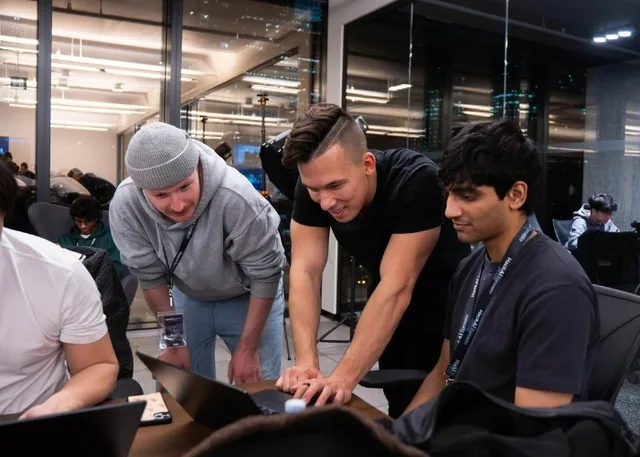
Stan is built around Creator‑Entrepreneurs, and you use real‑time feedback from that community to test, refine, and launch products. How do you turn customer feedback into product decisions without simply trying to build every feature someone requests—and what role does first‑principles thinking play in choosing what to prioritize?
You can’t build every feature customers ask for. The important thing is to understand the problem behind the request. Customers will often tell you what they think the solution is, but your job is to step back, break the problem down to the bone, and figure out what’s actually causing it. That’s where first-principles thinking is really useful, where we focus less on the feature being requested and more on the underlying problem.
When we first started Stan Store, we noticed that many people signing up were struggling to monetize their audience. At first, you could assume they needed more features in their storefront. But when we looked at the problem, we realized that many of them didn’t have a large enough audience to sell to in the first place. So instead of continuing to add features to the storefront, we built Stanley, an AI Head of Content, to help solve the problem: growing their audience.
Stan has recently introduced Stanley, an AI “Head of Content” designed to help creators develop ideas and draft platform‑specific content while retaining their unique voice. Why do modern founders increasingly need to be storytellers and community leaders as well as product leaders, and what advice would you leave with Canadian entrepreneurs who want to build enduring businesses around a real audience?
Building a great product is only part of the job now. You can build something genuinely useful, but if nobody understands why it matters or feels connected to what you’re trying to do, getting attention becomes incredibly difficult. If people don’t know you exist, even a great product can struggle to gain traction. And that’s especially true when you’re building a community. You have to stay close enough to the people you’re serving to understand what they’re struggling with and what they need.
My advice for Canadian entrepreneurs is to stop treating your business and your personal brand as separate things. Talk about what you’re building while you’re building it, and be honest about what’s working and what isn’t. The audience you build that way is worth more than any single launch, because they’re not showing up for a product, they’re also showing up for you. That’s a much harder thing for a competitor to take from you.
Disclaimer: The views and opinions expressed in this interview are those of the interviewee and do not necessarily reflect the official policy or position of CanadianSME Small Business Magazine. Our platform is dedicated to fostering dialogue and sharing insights that inspire and empower small and medium-sized businesses across Canada.