How Canadian SMEs Can Show Their Customers They Use AI Responsibly

Clients increasingly ask how small businesses use AI in their work. The article outlines three habits: disclose meaningful AI use, keep a named person accountable for reviewing output, and protect confidential data, plus a one-page AI use policy to build client trust.
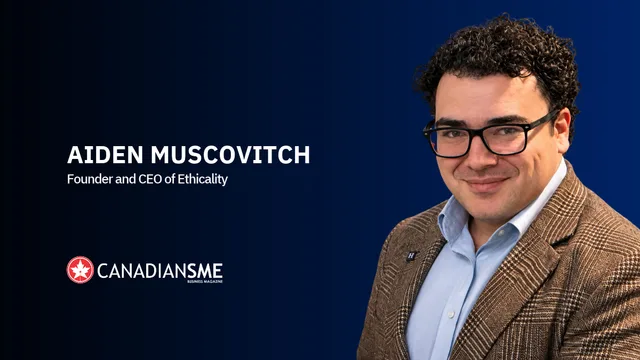
By Aiden Muscovitch
Clients are starting to ask small businesses a new question: How exactly are you using AI in the work you do for me?
Canadian small businesses now use AI to draft emails, prepare reports, analyze data and manage customer relationships, often with tools that cost little or nothing.
Clients paying for that work want to know a few things: that their information is protected, that a person is checking the output, and that they're getting what they paid for. Most of them aren't against AI being used. They just want a straight answer.
A business that can give one has an edge. Getting there doesn't require a consultant or a compliance department. It comes down to three habits.
1. Tell clients when AI does real work for them
If AI meaningfully contributes to something a client is paying for, say so.
That doesn't mean disclosing every grammar check or calendar reminder. It means being upfront when AI plays a substantial role in producing a deliverable.
A marketing agency, for example, might tell clients that it uses AI to generate early campaign ideas, and that its team develops, reviews and approves everything that goes out.
2. Keep a human accountable
AI tools can summarize documents, spot patterns in data and draft recommendations. They also make mistakes, often while sounding certain.
Set one rule: when AI contributes to important work or decisions, a named person reviews it and owns the result.
For an accounting firm, that means someone checks AI-assisted analysis before it reaches a client. For a recruitment agency, it means no candidate is screened out by an algorithm without a person looking at the decision.
3. Keep confidential information out of the wrong tools
Picture a bookkeeper who pastes a client's bank statements into a free chatbot to tidy up a spreadsheet, with no idea whether that data is stored or used to train the model.
Before you or your staff use an AI tool for client work, check two things: whether the provider keeps or trains on what you enter, and whether a paid business plan offers stronger protections. Then decide which kinds of information can go into which tools.
This is a legal question as well as a trust question. Canada's private-sector privacy law holds businesses responsible for the personal information they collect, including when they hand it to an outside service. "The AI tool did it" won't satisfy a client or a regulator.
Put it in writing
Habits are easier to keep, and easier to show clients, once they're written down. For most small businesses, a one-page AI use policy is enough. It should cover:
● which AI tools you and your staff can use, and for what
● when AI use is disclosed to clients
● who reviews AI-assisted work before it goes out
● what information never goes into an AI tool
Ethicality offers free templates for this at www.ethicality.ai/templates, including a one-page AI Use Policy and ready-to-use disclosure language. Post a short version on your website so clients can see it.
Some businesses go a step further and get certified. Ethicality assesses businesses against its published Ethicality AI Use Standard and, when they qualify, issues a Badge clients can verify in a public registry.
Trust as a selling point
Small businesses have always competed on price, quality and service. As AI becomes part of everyday work, how a business uses it is becoming one more reason clients choose one firm over another.
The next time a client asks how you use AI, you should be able to hand them a one-page answer, or even show them an Ethicality Badge.
Aiden Muscovitch is the Founder and CEO of Ethicality, an independent certification body helping businesses demonstrate responsible AI use. Previously, he worked on Parliament Hill as a Parliamentary Communications Intern for the Honourable Michael Chong, PC, MP, during his tenures as Shadow Minister of Foreign Affairs and Finance. He also served as Assistant Editor at The Hub, where he authored one of the publication’s most widely read weekly columns, and as a producer for the internationally recognized Munk Debates. Through Ethicality, he is working to make AI accountability accessible to businesses of all sizes, supported by an advisory board of leading experts in law, technology, and public policy.