Navigating The Changing Marketing: How Leadership Can Successfully Embrace New Technologies and Strategies

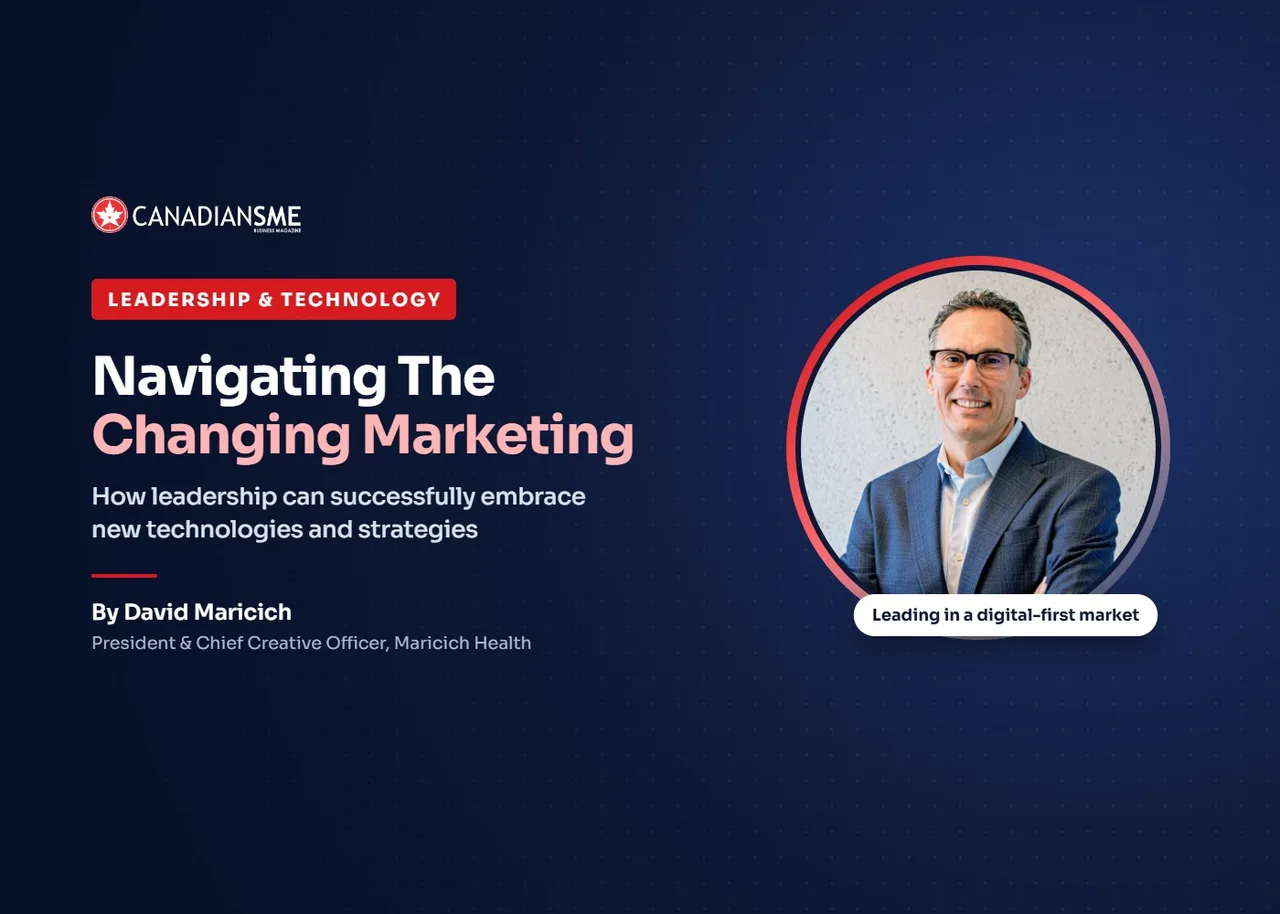
Image courtesy: Maricich Health
Cloud computing, AI, cybersecurity and CRM software can help small and medium-sized businesses compete in a digital-first economy. David Maricich of Maricich Health explains which technologies to adopt and how leaders can bring their teams along.
In this article4 sections
Cloud computing, artificial intelligence (AI), and automation have become the backbone of firms of all sizes; from small and medium-sized companies to large corporations, embracing new technologies has allowed companies to compete in a digital-first environment with faster results, lower costs, and improved customer experiences.
While many companies have already embraced new technologies, others are still scratching their heads, trying to figure out how to adapt to these rapid changes. As these tools grow more complex, it can be hard to know what will work for you. In this article, we will go over why you should embrace new technologies and strategies for your business, what technologies to embrace, and how to do it.
Main Benefits of New Technology Adoption
Simplifying Workflow
A more efficient company makes more money. Business is as fast-paced as it’s ever been, and more consumers expect results almost immediately, or they look to your competitors. With the right technology, you can boost productivity to meet your customers’ needs, such as sharing information quickly or providing reimbursements immediately.
Better Collaboration
Technologies like video conferencing have helped companies embrace remote work and collaboration, and communicate better with customers. Companies are keeping these communication methods because they’ve realized the advantages. Newer technologies have made it inexpensive to keep everyone in the loop on a project’s progress. Tasks that require many people to work together are easier to coordinate because employees can check in from anywhere using their smartphones, laptops, or tablets.
Excellent Analytic Tools
Newer technologies can also offer you better ways to understand your customers, business, and employees. Analytic tools can point you to new markets, show you the types of products your customers like, and inform your marketing strategy and decisions.
Positioning for Future Growth
Constant innovation is the only way most companies can survive in a constantly changing business environment. Building a company ethos where it’s OK to change how core business is done when it makes sense helps a company adapt quickly to unforeseen market changes. The best technology makes your company more fluid, adaptable, and able to change rapidly.
What Technologies Should You Embrace?
Cloud Computing
Cloud suites like Microsoft 365 and Google Workspace often serve as the backbone of many small and medium-sized businesses. They provide secure email, file sharing and storage, collaboration, and productivity tools you can access anywhere. These platforms also include identity management and basic security controls, reducing the costs of maintaining local infrastructure.
Cloud technology also supports accounting, payroll, and invoicing tools, along with popular collaboration tools. They provide scalable storage and processing for growing enterprises, while eliminating the need to worry about security.
AI Platforms and Automation
Many companies have fully integrated artificial intelligence (AI) into their daily routines. Common uses include data analytics, text analytics, and chatbots, which companies use to understand data, develop content, and triage consumer messages.
This translates into practical applications such as:
- Creating drafts of emails, blog posts, and social media for staff to refine.
- AI-powered chatbots used to handle common customer questions while routing complicated inquiries to human help
- Using AI to extract data from bills, contracts, and forms, which eliminates manual entry and errors.
Cybersecurity
With over 6 billion active internet users, risks are higher than ever when manipulating, storing, and protecting online information. One security breach can destroy your company’s reputation and cost you hundreds of thousands of dollars in lost assets and damages. Many companies invest in security to build customer trust by showing how seriously they take protecting personal information. Embracing cybersecurity includes installing and monitoring firewalls and configuring networks that work behind the scenes to prevent threats from materializing.
CRM Software
Customer relationship management (CRM) software is an overlooked technology that offers even small organizations a powerful, affordable solution that can be deployed quickly. This tool centralizes customer data, tracks interactions, and automates sales, marketing, and services all in one place.
Whether making it easier to close sales, service customer requests, onboard new clients, complete contracts, or handle other common customer and sales functions, CRM systems improve efficiency and lower costs by eliminating cumbersome, complex manual processes that are often less accurate and timely. Embracing CRM software can supercharge your customer service and marketing campaigns by transforming key insights into better interactions and more effective media.
How to Embrace the Change
While these tools can transform your organization, your staff and employees must be aligned to harness their power truly. Here are some ways to build the support you need to help them embrace these new tools.
Communicate the Case for Change
When introducing new technologies, take a thoughtful approach and build the case from the start for why you made these changes. This includes communicating your strategic vision, setting clear expectations, and soliciting feedback. This helps employees see the big picture and understand how the new technology can impact their performance.
Constant Listening
Organizations must create continuous feedback loops that let employees share their experiences throughout implementation. This is essential to understand and align the technology with employees’ needs. Employees should never feel like their feedback will be used against them in any negative way. At the same time, leaders should act on this feedback to increase productivity and embrace employee engagement.
Measuring Adoption Instead Of Usage
Organizations should avoid gauging the success of a technology change initiative solely on usage. What matters is adopting an adoption mindset that focuses on how much employees derive and maximize business value from the new technology. Some organizations succeed by introducing technology features strategically, starting with those most likely to win people over and moving to more disruptive changes later.
Empowering Employees
While change is naturally overwhelming, organizations can support employees as they adopt workplace technology changes. Organizations can offer different support options so employees can choose what works best for them. Options include offering training in different formats, making experts available through office hours, and leveraging super users to share best practices and engage with the new technology.
The Road Ahead
The global economy is increasingly digital and competitive. To keep up with the changing landscape, you should explore cutting-edge technologies that help you stay flexible and turn former obstacles into opportunities. Technologies such as AI-powered tools, cybersecurity, and cloud computing boost productivity and future-proof your organization for the challenges ahead.
However, adopting the newest technologies is not enough to succeed. To fully realize the power of these tools, leadership must support this innovation, promote it at all levels of the organization, and integrate it into daily operations. This means encouraging curiosity, rewarding trial and error, and not fearing failure.
David Maricich, President & Chief Creative Officer of Maricich Health, has spent more than 20 years leading healthcare innovation, branding, marketing, and communications initiatives for hospitals, health systems, and Fortune 500 healthcare companies across the U.S. and internationally. He has led growth, advocacy, and change-management campaigns while helping organizations improve public health outcomes through strategic, creative communications.
View profile →