What 15+ Years of Making Hot Sauce Taught Me About Building a Canadian Food Brand
Lessons in clean-label formulation, cracking retail shelf space, and playing the long game as a small food producer
When I started Nerpy’s in 2008, I wasn’t thinking about supply chains, retail buyers, or clean-label regulations. I was thinking about Scotch Bonnet peppers — the fruity, fiery backbone of Jamaican cooking — and how underrepresented that flavour was on Canadian shelves. Almost two decades later, Nerpy’s is a hot sauce and marinade brand made in Richmond Hill, Ontario, and it’s now sold in grocery chains across the region. Getting here taught me a few things I wish someone had told me at the start.
Clean-label isn’t a marketing choice — it’s a formulation constraint
Early on, I decided Nerpy’s products would be all-natural: no MSG, no artificial colours, no gels or bonding agents, no fillers. That decision sounds simple until you’re actually formulating a shelf-stable hot sauce. Preservative-free, naturally-derived products behave differently in production — consistency, shelf life, and even colour can shift batch to batch in ways a conventional formulation wouldn’t. We had to lean on our core ingredients themselves — vinegar, pepper mash, natural acidity — to do the preservation work that additives usually handle.
The payoff has been worth it. Clean-label isn’t a checkbox anymore; consumers actively look for it, and it’s opened doors with retailers who screen suppliers specifically on ingredient sourcing. But if you’re building a food brand around this positioning, budget real time and testing for it. It will cost you more trial and error upfront than a conventional formulation would.
Getting on the shelf is a longer sale than getting the product right
Making a hot sauce people love is, in some ways, the easier part. Getting it into a grocery chain is a different kind of work entirely. Buyers want proof: consistent supply capacity, food safety certifications, a track record of sell-through, and a brand story that fits their shelf. Each retailer has its own onboarding process, its own paperwork, its own timeline — and none of it moves quickly.
What helped us most wasn’t a single pitch meeting. It was showing up consistently at farmers’ markets, craft fairs, and community events for years before we ever approached a chain buyer. That groundwork gave us something to point to: real sales data, real customer loyalty, and word of mouth we didn’t have to manufacture. By the time we sat down with a retailer, we weren’t asking them to take a risk on an unknown — we were showing them a brand that already had traction.
Your story is part of the product
Nerpy’s is built on Jamaican roots — Scotch Bonnet peppers, pimento, the flavours I grew up with. That heritage isn’t a footnote on our packaging; it’s the reason the product exists and tastes the way it does. Leaning into that authentically, rather than diluting it to appeal to the broadest possible audience, has been one of our better decisions.
The lesson here isn’t just “tell your story.” It’s that the specificity of your story is what makes it memorable. A hot sauce is a hot sauce until you know why it exists.
Third-party recognition compounds
Food competitions and regional “made here” programs are the kind of thing most small producers overlook, since any single one seems like small potatoes. But taken together, they build a body of third-party validation that makes every subsequent conversation — with a retailer, a journalist, a customer — a little easier. If you’re a small food producer, entering them costs little, risks little, and compounds over time in ways that are hard to see until you look back.
The long view
If there’s one thing I’d tell someone starting a food brand in Canada today, it’s this: expect the timeline to be longer than you think, in every direction — formulation, retail placement, brand recognition. None of it happens in a single push. It happens in the accumulation of small, consistent decisions made over years. Nerpy’s took a long time to become an “overnight success.” I wouldn’t have done it any other way.
About Author
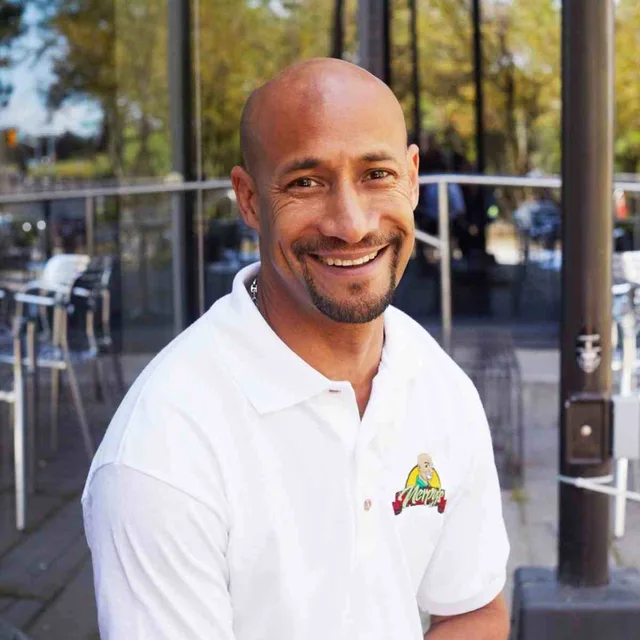
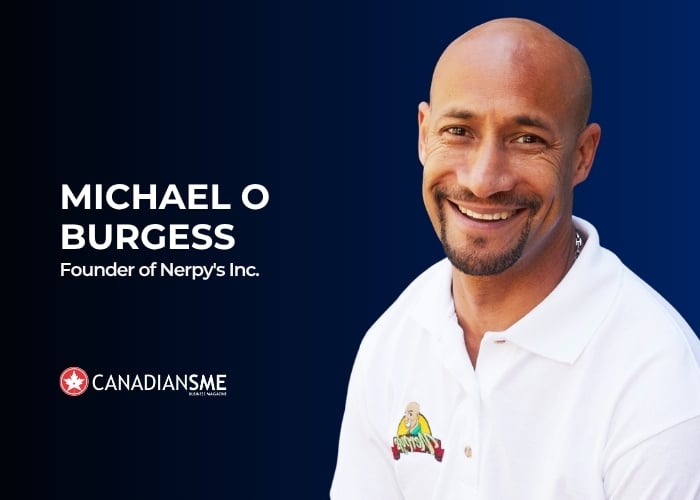
Michael is the founder of Nerpy’s Inc., a hot sauce and marinade company based in Richmond Hill, Ontario, making Scotch Bonnet-based Caribbean sauces since 2008.