Foggy River Farm Connects Canadians With Locally Grown Herbs
For Foggy River Farm, growing herbs means more than just creating an ingredient. It's about reconnecting people with...

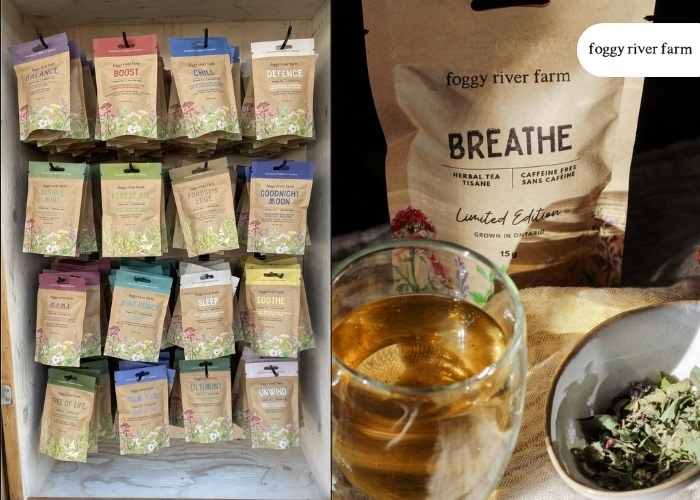
A wooden display rack filled with various Foggy River Farm herbal tea pouches, alongside a glass of brewed tea and a small bowl of loose tea leaves.
In this article8 sections
- From a Vegetable Farm to an Herbal Apothecary
- Growing More Than 40 Different Herbs
- Farming With the Ecosystem in Mind
- Building a Food Forest Since 2013
- Turning the Harvest Into Everyday Herbal Products
- Sharing Herbal Knowledge Beyond the Product
- A Canadian Business Rooted in Local Agriculture
- Keeping Herbalism Connected to the Land
For Foggy River Farm, growing herbs means more than just creating an ingredient. It’s about reconnecting people with plants, seasons, and the soil their products come from. Kate and Phil Collins started Foggy River Farm, a small herb farm and apothecary located just outside of Uxbridge, Ontario. The farm grows and wild-harvests herbs, then processes them into loose-leaf teas, tinctures, dried herbs, and other botanical goods. Much of the work is done by hand. According to its current website, the collection is 100% Canadian-grown and produced.
From a Vegetable Farm to an Herbal Apothecary
Foggy River Farm’s story began before herbal tea became the business’s mainstay. Kate and Phil said they relocated to the farm in 2011 after getting interested in the local food movement and wanting to do more meaningful work. They started a modest side company to produce and sell organic veggies. The farm’s direction gradually shifted as they learned more about wild plants already growing in the area, such as dandelion, yarrow, violet, and motherwort. Personal health difficulties prompted the pair to go more into herbalism and start developing herbal items for their own family.
According to Durham Region, the company moved its focus to medicinal and culinary herbs in 2017. What began as a tiny farmhouse grew into a dedicated herb farm that provides clients with teas, tinctures, botanical goods, and instruction.
Growing More Than 40 Different Herbs
Foggy River Farm grows more than 40 herbs today, including chamomile, tulsi, echinacea, sage, nettles, ashwagandha, lemon balm, and mint. The farm transforms these crops into an expanding range of goods, including:
- herbal tea mixes
- single dried herb
- Herbal tinctures
- culinary mixes
- Skin treatments
The current web catalogue contains items like BOOST Herbal Tea, CHILL Herbal Tea, DEFENSE Herbal Tea, Forest Tea Collection, Digestive Tea Collection, Ashwagandha Tea, and Calendula Flowers.
Foggy River Farm’s positioning is location-based. Rather than simply buying herbs to mix, the company grows and gathers many of the plants used in its products in Ontario and processes them near where they’re harvested.
Farming With the Ecosystem in Mind
Sustainability at Foggy River Farm is inextricably linked to how it manages the land. The company claims that its agricultural philosophy stresses healthy soil, biodiversity, pollinators, and long-term environmental care. Its purpose is to produce effective plants while leaving the soil in the same or better condition than when cultivation began. Foggy River Farm operates on only a few acres and relies heavily on physical labour for planting, harvesting, and processing. According to the founders, a slower approach lets them work within the existing ecosystem while maintaining control over product quality.
Phil has a highly relevant background for this work. He is a professional landscape architect who previously co-founded Fresh City Farms, bringing his expertise in urban agriculture, ecological design, and permaculture to Foggy River Farm’s growing operations.
Building a Food Forest Since 2013
The food forest is one of the farm’s longest-running ecological projects. Since 2013, Kate and Phil have worked on an edible forest garden where fruit and nut trees, berries, medicinal plants, and other species coexist as part of an integrated ecosystem. Phil’s project, Foggy River Farm, blends landscape architecture, farming, and permaculture.
Rather than treating each crop as a separate production unit, the food forest investigates how diverse plants might work together to create a more resilient growing environment. This approach mirrors Foggy River Farm’s overall idea: agriculture can produce useful items while also increasing people’s awareness of natural processes.
Turning the Harvest Into Everyday Herbal Products
The farm’s emphasis on local production extends beyond harvesting. Foggy River Farm says it makes its tinctures from herbs it grows and processes to optimal strength, while its loose-leaf teas contain herbs farmed or wild-harvested in Ontario. Foggy River Farm offers tea blends based on specific occasions and habits, such as nighttime, digestive, woodland, and wellness. Its Seasonal Herbal Box includes teas and tinctures chosen for the changing seasons, giving the brand another chance to relate its products to natural cycles.
This seasonal approach is vital for the company. Instead of presenting herbs as separate commodities, Foggy River Farm consistently connects goods to when plants grow, how they are harvested, and how people have traditionally integrated them into daily life.
Sharing Herbal Knowledge Beyond the Product
Education has also become essential to Foggy River Farm. The company publishes herbal instructions on its blog and offers seminars, workshops, and farm experiences so clients can learn to grow and work with herbs themselves. Its educational programs cover topics such as planting an herb garden, gathering and drying herbs, studying medicinal plants, and making homemade herbal remedies. Kate and Phil also do corporate and private workshops that can last anywhere from 45 to 90 minutes.
The farm also offers farm tours, herb walks, and tea tastings, allowing visitors to learn about the plants and agricultural processes behind the finished products. This educational approach reinforces the company’s core objective: connecting customers with the origins of the products they use and consume.
A Canadian Business Rooted in Local Agriculture
Durham Region has also recognized Foggy River Farm as one of the area’s most creative farming businesses. The regional profile noted Kate and Phil’s transformation from vegetable farming to medicinal and culinary herbs, as well as the variety of plants grown on their property. Recent regional press has highlighted the farm’s progress and the owners’ dedication to agricultural production above mass-produced commodities.
Keeping Herbalism Connected to the Land
Foggy River Farm is an excellent example of how a small Canadian agricultural firm can integrate farming, product development, and education into a single ecosystem. Kate and Phil Collins transformed their original vegetable farm into a specialized herbal operation while keeping the ideals that first drew them to agriculture. They focus on local plants, healthy soil, biodiversity, transparency, and educating consumers about where their products come from. In an increasingly international health market, Foggy River Farm’s local connection sets it apart. Every tea, tincture, and dried herb starts with the soil, and the brand wants clients to understand that connection as fully as possible. Foggy River Farm offers Ontario-grown herbal teas, tinctures, and botanical items.
Explore for more information: https://www.foggyriverfarm.com/
Your support is crucial in our mission to foster a community of innovators. CanadianSME Magazine is a valuable treasure trove of entrepreneurial knowledge. Click here to subscribe to our monthly editions for updates on Canadian businesses. Your role in staying updated is integral to our shared mission. Follow our handle @canadian_sme on X to remain updated on all business trends and developments.
With an aim to contribute to the development of Canada’s Small and Medium Enterprises (SME’s), Cmarketing Inc is a potential marketing agency and a boutique business management company progressing rapidly in its scope. By acknowledging a firm reliance of the Canadian economy over its SMEs, the agency has resolved to launch a magazine, the pure focus of which will be the furtherance of Canadian SMEs, and to assist their progress with the scheduled token of enlightenment via the magazine’s pertinent content.
View profile →