How to Scale a Foundation Repair Business Without Sacrificing Quality

- Steps
- 6
- Time to read
- 5 min
- Topic
- Leadership
- Published
- Oct 19, 2026
When I started ProCore Foundation Repair Systems 18 years ago, I could handle almost every part of the business. I knew what was happening on our jobs, spoke directly with customers, and could see for myself whether the work met my standards. Growth changes that. As we added more customers, employees and crews, I had to learn how to maintain those same standards without being involved in every decision or standing on every jobsite, and some of those lessons took time to learn.
After more than 25 years in construction and 18 years running ProCore and being your trusted foundation repair expert in Ottawa, Gatineau, and Kingston, I’ve seen how easily a trades business can grow faster than the people and processes supporting it. I’ve also learned that how you lead the company has to change as it grows.
These five lessons have shaped how I’ve approached growth at ProCore, and they apply to any small trades business trying to grow without losing the quality and reputation it was built on.
- Step 1 of 6
1. Quality Is a Team Effort
In the early stages of a trades business, the owner is usually close to every aspect of the work. That becomes harder to maintain as the company grows. With more crews working across different jobs, the owner won’t always be there to catch the small things. Each crew member also has their own way of communicating with customers and leaving a jobsite at the end of the day. Over time, those small differences can affect the customer experience and our ability to ease clients’ questions with expert solutions.
Trying to keep a hand in every project can work for a while, but it gets harder as the workload increases and other business priorities land on your desk. Eventually, the people doing the work need to know what the company’s standards look like in practice and feel responsible for meeting them.
Clear expectations help with that. Everyone should understand what good workmanship looks like, how to treat customers, and what to do when something goes wrong. When the team understands those standards, maintaining quality becomes much more manageable as the business grows.
- Step 2 of 6
2. Hire for Culture Addition and Technical Ability
Finding skilled people is a challenge across the trades, so experience naturally carries a lot of weight when hiring. As a company grows, though, you also have to think about how someone will work with the rest of the team and interact with customers. Someone can have years of experience and still struggle with communication, accountability or taking feedback. Those things matter when employees are representing the company every day, without the owner there.
In foundation repair, crews are also working at people’s homes during what can already be a stressful situation. Customers may worry about cracks, water problems, or repair costs. They want to feel comfortable with the people working on their property and confident that their questions are being taken seriously. That’s why hiring should prioritize reliability, accountability, a willingness to learn, communication, and pride in the work. Training can then build on those qualities by clarifying expectations for how the work is completed, how the jobsite is treated, and how customers are kept informed.
As the team grows, hiring decisions directly affect how consistently the company can deliver the experience it built its reputation on.
- Step 3 of 6
3. Focus on Building Reputation and Industry Standards
Even with competent people on the team, problems can arise when everyone does things slightly differently. Clear processes keep everyone aligned. They don’t need to complicate the work. They should give employees a clear understanding of how a job moves from start to finish and where their responsibilities fit into that process.
In foundation repair, that can include how a property is assessed, how the recommended work is documented, what crews are expected to do on site and how the work is checked before the job is considered complete. There should also be a clear way to handle issues when something doesn’t go according to plan.
Customers shouldn’t have a noticeably different experience depending on which crew shows up at their home. As a company adds people and takes on more work, building those standards into day-to-day operations helps keep work quality consistent.
- Step 4 of 6
4. Focus on Scalable Growth and Processes
When demand picks up, saying yes to more work can feel like the obvious next step. But the schedule is only one part of deciding how much work a company can realistically take on. The team has to be able to support that growth too. If new jobs come in faster than the company can hire and train people, crews can get stretched thin. Training may get rushed, supervisors have less time to support their teams, and small issues become easier to miss.
Those are signs that growth may be outpacing the business. In the trades, customers may see that in delays, communication problems, or work that doesn’t meet the company’s usual standards. Capacity needs to account for the people, training and support behind every job. Before adding more work, assess whether the team can take it on and still deliver the same level of service customers expect.
Sometimes slowing down or turning down a job makes more sense than stretching the team further. Protecting work quality during busy periods helps ensure today’s growth doesn’t create problems that are much harder to fix later.
- Step 5 of 6
5. The Founder’s Role Has to Change
Running a company with several crews and employees requires something different from the owner than it did in the early years. You can’t be on every job, answer every question, or make every decision, and letting go of some of that control takes time.
It also requires trust. The people you’ve hired need room to take responsibility for their work, solve problems and make decisions within the standards the company has established. That becomes much easier when expectations are clear, and employees have the training and support they need. Sometimes something goes wrong, or a process needs to change. Those moments are part of growing a business. They can also show you where the team needs more support or where expectations haven’t been communicated clearly enough.
After 18 years of running Pro-Core, I’ve learned that growth asks you to keep changing as a leader. What works for a five-person company won’t necessarily work when more employees, crews, and customers depend on the business. For trade owners, that can be one of the biggest adjustments that comes with growth. The standards that built the company’s reputation still start with you, but over time, the team has to carry that torch forward.
- Step 6 of 6
About The Author
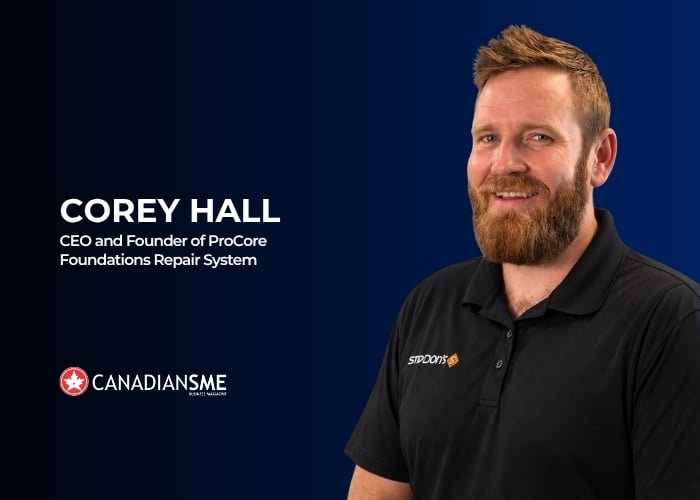
Corey Hall, CEO and Founder of ProCore Foundations Repair System
Corey Hall is the Founder and CEO of Pro-Core Foundation Repair Systems, with more than 25 years of construction experience and 18 years as a business owner. Inspired by working alongside his father from a young age, Corey founded Pro-Core to raise the standard for foundation repair by delivering dependable workmanship, honest recommendations, and exceptional customer service. Under his leadership, the company has grown into one of the region’s most established foundation repair firms, earning a reputation for quality, transparency, and long-term solutions.
Keep this guide as a checklist
Every step on one page, with boxes to tick as you go. Print it or save it as a PDF.